• Skip to primary navigation
  • Skip to main content
  • Skip to footer
Bidvest Noonan

Bidvest Noonan

A leading provider of Facilities Management Services

  • Sectors
        • Our Sector Expertise

        • Healthcare
        • Education
        • Transport
        • Central & Local Government
        • Life Sciences
        • Food Manufacturing
        • Retail
        • Real Estate
        • Corporate
        • London Security
  • Services
        • Single, Bundled, and Integrated Service Solutions

        • Security Services
        • Technical Services
        • Risk and Security Consultancy
        • Energy Management
        • Cleaning Services
        • Electronic Security
        • Transport Cleaning
        • Reception Services
        • Facilities Management
        • Industrial Cleaning
        • TwinSpace
        • FM Service Transformation
  • Sustainability
  • About Us
        • Leadership
        • Our Purpose
        • Accreditations
        • ED&I
        • News Room
        • Digital Operations Platform
  • Innovation
  • Contact Us
        • Build a career with us

          Do you share our passion for creating safer and healthier communities?

        • Careers
        • Get a Quote

          We can design the perfect solution for your business, helping you achieve your objectives.

        • Contact Us

cleaning

Digitalisation in life sciences cleaning

September 23, 2026 by Cinara

Few sectors are investing in digitalisation as seriously as life sciences. Yet it is also a sector that adopts innovative technology carefully and deliberately. In an environment where a change that goes unnoticed can affect a product people depend on, moving slowly is not caution for its own sake; it is good practice. Any new digital system has to earn its place and be qualified and validated before it goes near a live area.

The same discipline should shape how a service partner approaches technology. The opportunity is not to add technology where it isn’t needed, or to change how a manufacturer validates and runs its controlled environment. It is to build capability that complements existing GMP sanitisation and cleaning practices, and that makes the delivery of the work more consistent, efficient, and to a higher standard.

Brian Maguire, Director, Life Sciences, shares his thinking on how we are approaching this, and why it should make the work better, not just easier.
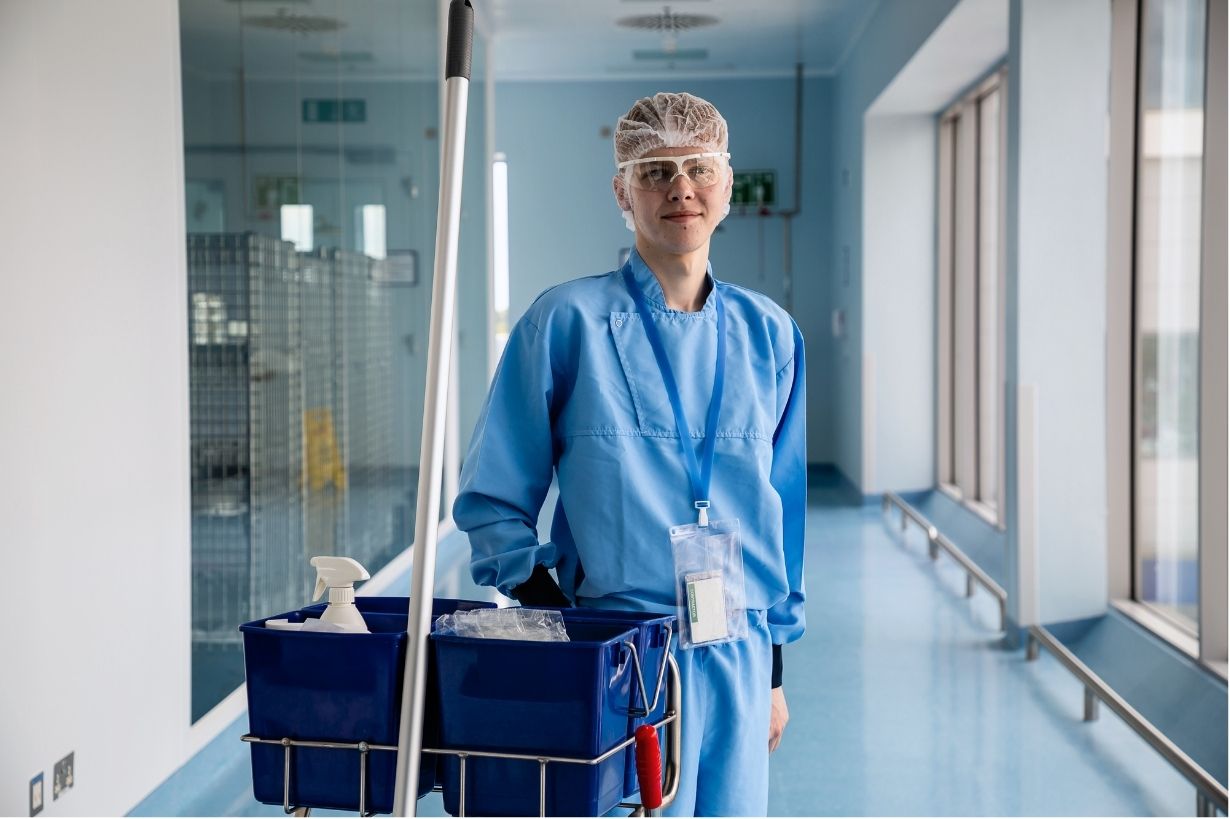
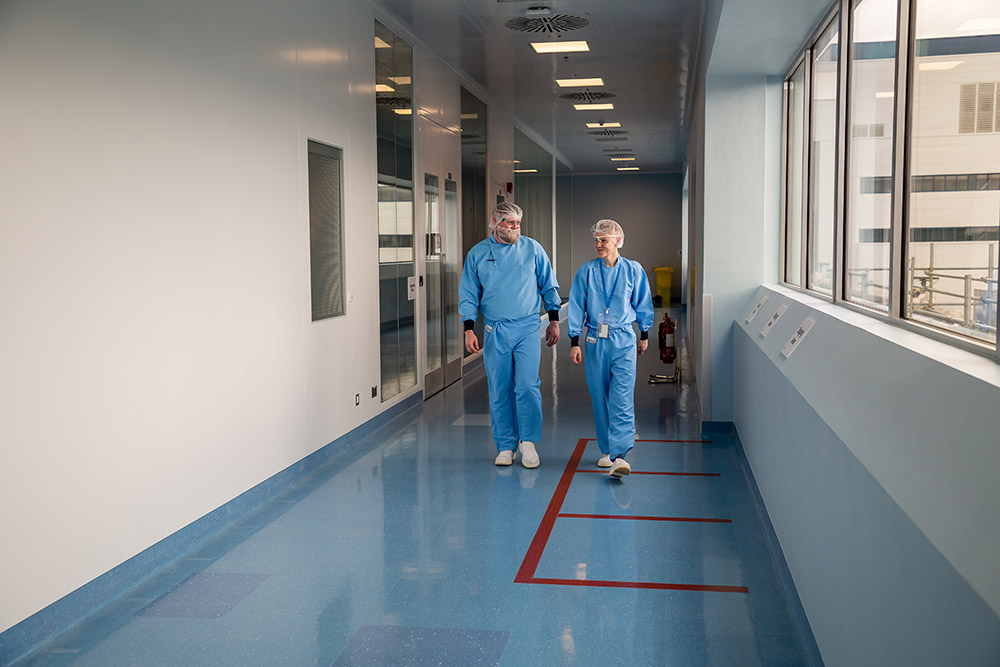
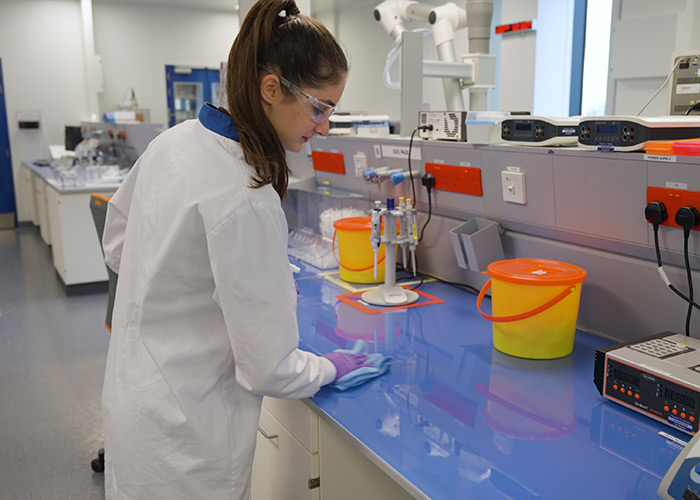
  • GMP Cleaning team walking in a pharmaceutical environment
  • Bidvest Noonan GMP Cleaning team cleaning a pharmaceutical environment

Building capability that fits the environment

The organisations we work use carefully developed and well-established systems of their own. They set the procedures, they hold the validated records, and they define the standard the work is held to inside their GMP-controlled environments, in line with their GxP requirements. What we are building is there to support it: our own digital operations platform, TASK, designed around the realities of a controlled environment rather than bolted on to them. Its role is to make sure colleagues within these areas follow the right client-defined process, in the correct sequence of cleaning and disinfection, understand why it matters for GxP compliance, and that we can demonstrate the work was carried out to highest standard achievable.

There is a fair concern, whenever technology enters careful work, that it becomes a box-ticking exercise: people stop thinking and simply tap a screen. If that were all a system did, it would make the work worse. Used properly, the effect is the opposite. When the correct step is in front of someone at the moment they need it, and what they have done is captured as they do it, there is less room to drift. The standard does not drop. It becomes harder to walk past.

Turning a hundred-page procedure into something people can follow

A cleaning SOP on a life sciences site can run well past a hundred pages, all of it technical and none of it open to interpretation. Expecting someone to hold all of that in their head and apply it perfectly, every time and often under time pressure, is a great deal to ask.

TASK lets us manage the information required by our operatives and present in clear steps, and in the right order, with nothing removed from the standard itself. It also gives GMP leads assurance that operatives are delivering the procedure correctly and in the manner the SOP defines. Just as importantly, it lets us present the work in a way people genuinely understand. Our teams come from many different backgrounds, and English is not always a first language. GMP terminology and dense regulatory wording are a real barrier to getting a task exactly right, so we break it down into plain, clear instruction, available in a way that works for the person carrying it out. Understanding this improves the standard far more reliably and this is where a digital approach earns its place: it closes the gap between what a procedure says and what a person understands.

Keeping the proof beside the work

In controlled and GxP environments, contamination control depends on being able to show what was done, not just that it was done, and the closer the record sits to the job, the more it can be trusted. TASK captures the work as it happens, what was cleaned, when, and by whom, forming a reliable audit trail rather than relying on a write-up at the end of a shift. The record is built as the work is done, not reconstructed afterwards, which is what data integrity really means in practice. Alongside it sits a clear view of who is trained and to what level, so the people in each area are the people who should be there.

That has real operational value. A room returning to production without delay depends on the clean being right first time and signed off without question, which supports faster room turnaround and protects against operational downtime. Consistent, well-followed process supports the safety of our own people, and a record captured in real time means that if a query is ever raised, it can be traced to the exact task, the operator and the time, rather than pieced together after the fact. That makes a deviation far easier to investigate and reduces the risk of an audit observation. In a sector where an inspection can arrive at short notice, the evidence being already in place, and accurate, is worth a great deal.

Where this is heading

The real value is not in any single tool, but in integrating systems: bringing the information gathered across preparation, delivery, and evidence into one logical view. When the way we prepare and develop our people connects with how the work is carried out and evidenced, a person’s understanding of the work and the proof of how they performed the task stops being separate systems and becomes one singular process. That is what we are building toward: not technology for its own sake, but a workforce that understands the why behind every task, working to a standard that can be shown at any moment, and held consistently in a sector where it can never slip.

Filed Under: Expertise, Latest News, Uncategorized Tagged With: cleaning, GLP experts, GMP, key-content, pressrelease

New Technology for Safer Patient Environments

September 11, 2026 by Cinara

Our team at Our Lady of Lourdes Hospital has implemented cutting-edge HPV decontamination technology, strengthening infection prevention and helping keep patients safe.

Bidvest Noonan team at Our Lady of Lourdes Hospital.

A huge well done to our team at Our Lady of Lourdes Hospital, Drogheda, on the successful implementation of a new cutting-edge HPV decontamination solution, delivered ahead of schedule.

This technology strengthens infection prevention and helps create safer environments for patients. By enabling rapid room turnaround, it improves patient flow while keeping standards consistently high, delivering a validated 99.9999% (6-log) reduction across a broad range of pathogens, consistently and reliably, 24 hours a day, 365 days a year.

Behind this success stands a team that made it happen. A huge well done to our team at Our Lady of Lourdes and to our IP&C specialist, Juan Guardado, whose drive and determination were central to delivering this project ahead of schedule.

Susan Howard, our Director of Operations, said:

“We are delighted to bring this advanced HPV decontamination technology to Our Lady of Lourdes. By giving the hospital a faster, more reliable way to return rooms to service while maintaining the highest standards of safety, this investment supports our clients in improved patient flow, operational resilience, and better outcomes for patients and staff. It reflects our ongoing commitment to supporting our clients with the very best solutions available.”

James Mc Garry, Deputy General Services Manager at Our Lady of Lourdes Hospital, who worked alongside the team throughout, added:

“This new technology is a real step forward for the hospital. It gives us the confidence that our environments are decontaminated to the highest standard, giving patients and their families real peace of mind, and getting rooms ready for them sooner. The team worked brilliantly to get us up and running ahead of schedule, and we’re delighted with the result.”

Filed Under: Expertise, Latest News, Uncategorized Tagged With: cleaning, innovationheader, key-content

The hidden change underway in today’s workplaces

February 26, 2026 by Cinara

Peter Smyth, Director of Innovation & Technology at Bidvest Noonan, on how new technologies are changing how buildings operate.

For many years, changes in buildings and facilities arrived in steady steps. A new piece of equipment here, an updated procedure there and gradual improvements across sites.

That picture is beginning to change. A group of technologies is influencing how buildings operate, how teams organise their work and how people use the spaces around them. Four areas in particular are shaping much of this progress: automation, IoT sensors, digitalisation and artificial intelligence (AI). What’s different now is the speed and interconnectedness of these changes, driven by rising sustainability demands, cost pressures, and expectations for smarter, safer workplaces.

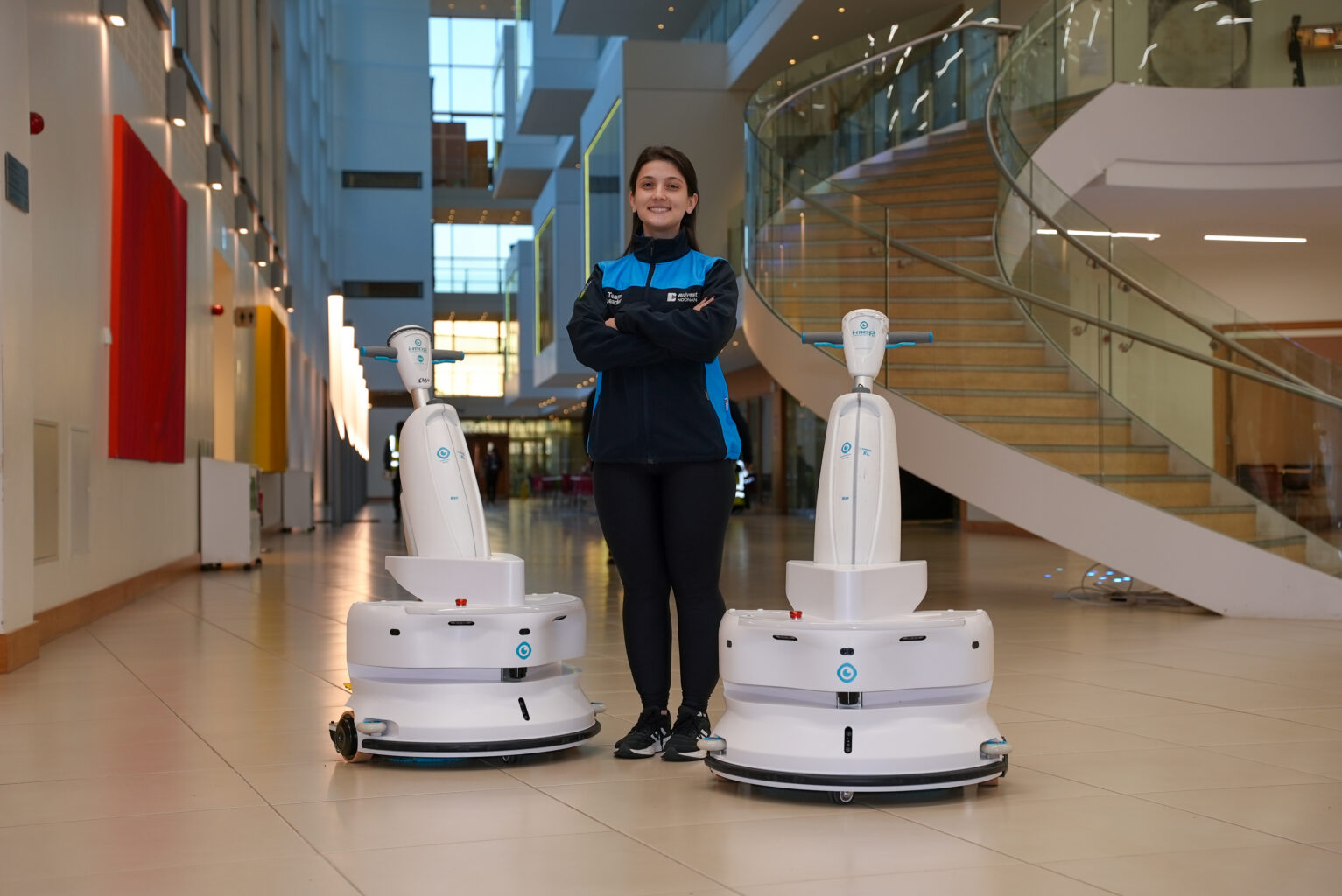
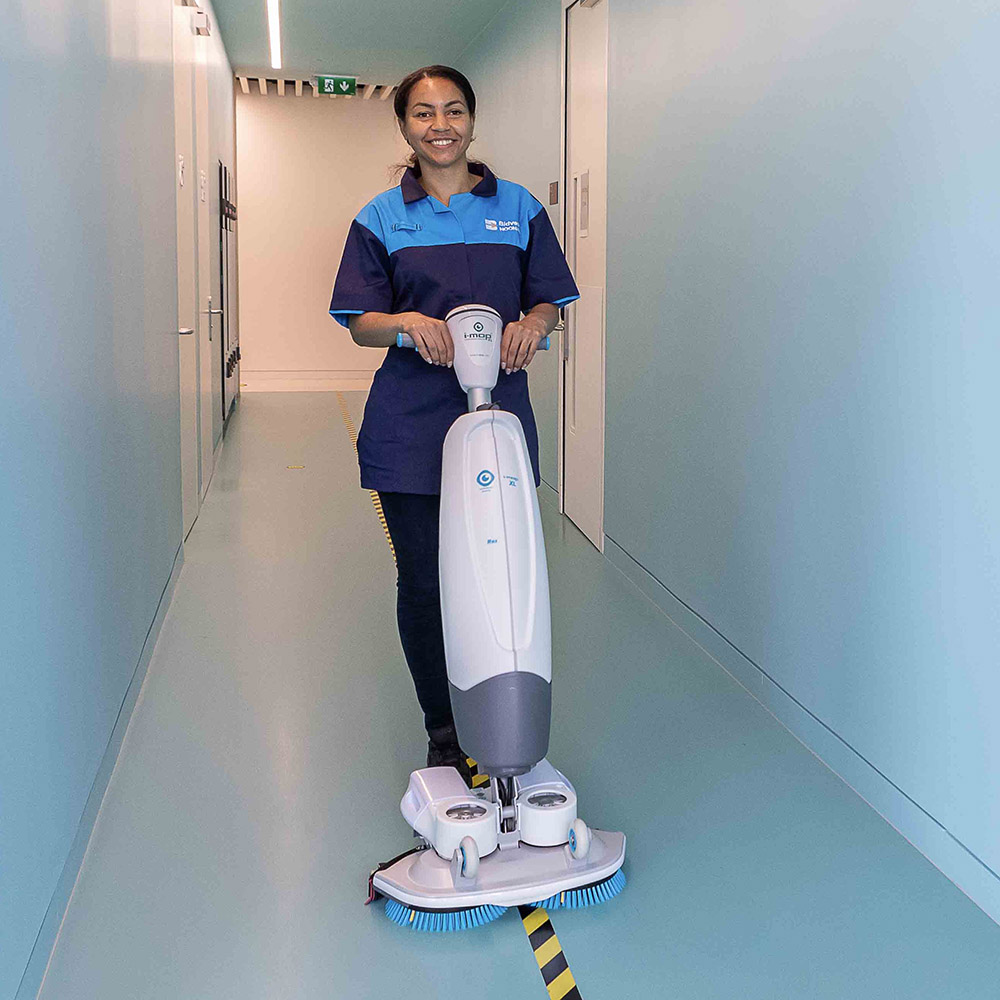
Automation has moved on from production lines and robotic arms. Today, some of the most interesting developments are appearing in far more familiar places: office buildings, hospitals, universities and transport hubs are beginning to use automation in practical and helpful ways, such as robotic cleaning machines.

As automation becomes more common, IoT sensors build awareness of what is happening inside a building, offering a rich and connected view of building activity.

Sensors can now track occupancy, temperature, air quality, water flow, vibration, light levels and other conditions. This allows buildings to respond based on what is happening.

Once organisations begin to collect richer information from sensors and systems, the next challenge is making sense of it all. Digitalisation helps by bringing all the data together in a way that is easy to work with.

One approach is the digital system twin, which helps people see how different components influence one another. If something begins to drift out of range, the model can reveal the knock-on effects, making it easier to pinpoint the problem and respond appropriately.

AI in this activity generates a growing amount of data, but data on its own does not create value. This is where AI is starting to play a distinct role in built environments, sitting inside other systems.

It is a layer of capability that makes other technologies more effective, for example robotic cleaners adjusting routes based on real-time conditions, or digital twins predicting how a system will respond under different loads or identifying early signs of failure.

Few organisations implement all four of these developments at once. Most begin with a single area, see the benefits and then explore the next step. Each development stands on its own and can bring clear value. At Bidvest Noonan, we’re seeing clients gain the most value when these technologies are introduced alongside strong frontline expertise and practical service design.

Together, they show how buildings and facilities are changing. Automation supports teams with routine work. Sensors help buildings sense and respond. Digitalisation gives people a clearer picture of how everything fits together. AI helps that connected environment learn, adapt and improve over time.

None of this replaces the need for experienced facilities and estates professionals. It gives them better tools and better information to manage buildings that are becoming more capable and more essential to how organisations operate. The most effective estates teams will be those who combine human judgement with data-led insight, turning buildings into partners in performance rather than passive infrastructure.

Peter Smyth, Director of Innovation & Technology

Filed Under: Expertise, Innovation, Latest News Tagged With: cleaning, innovationheader, key-content, pressrelease

Nick O’Connor: How integrated FM services are driving success at a Dublin Shopping Centre

January 13, 2026 by Cinara

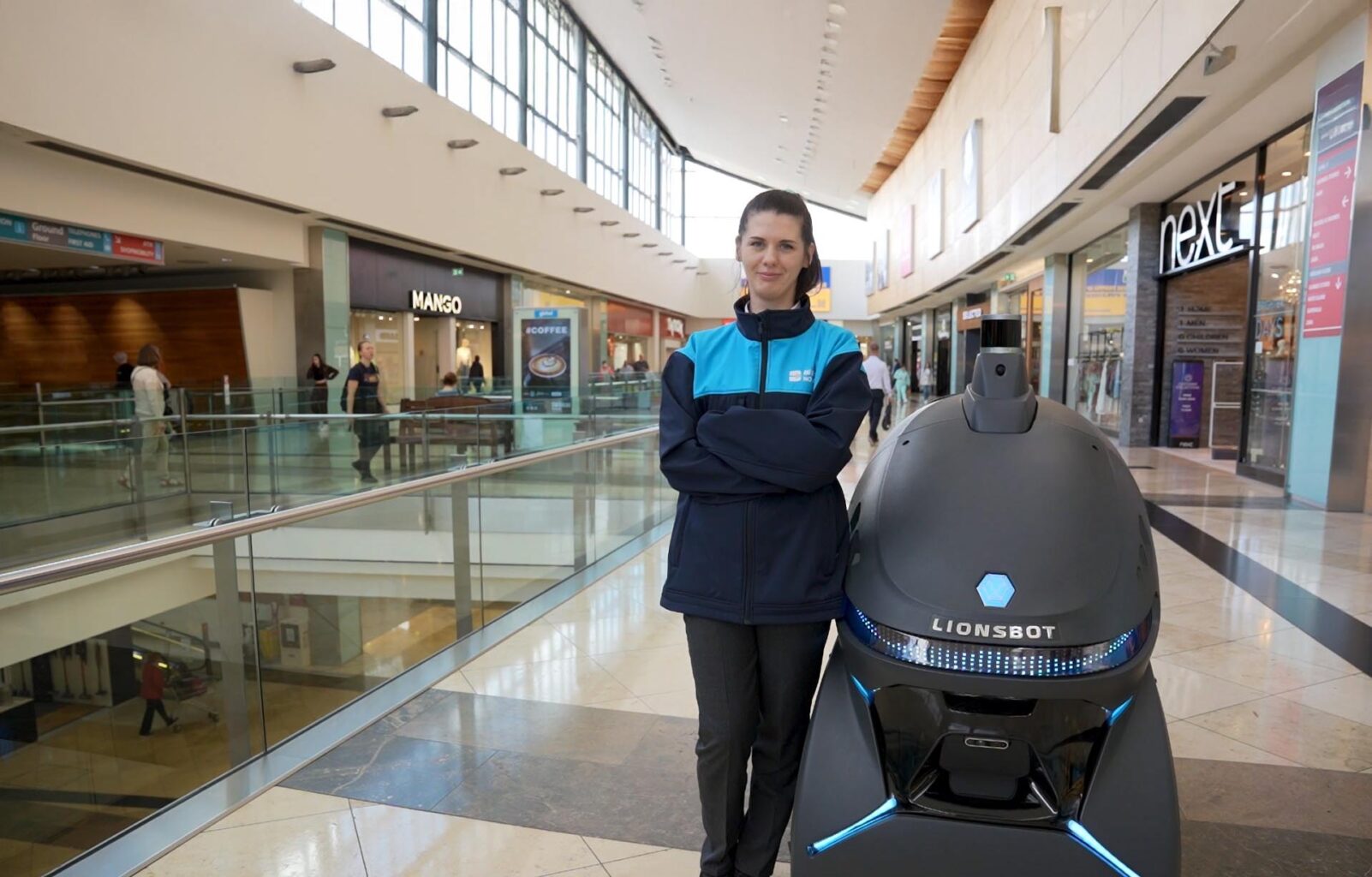
The retail environment is evolving rapidly, and shopping centres are increasingly recognising the value of an integrated service model that brings together facilities management (FM) services to enhance operational efficiency and improve the overall experience for customers, retailers, and service teams alike. At Bidvest Noonan, we have long believed that bundling FM services improves efficiency and delivers long-term benefits for a growing number of clients. One exemplary site where this approach has proven successful is Liffey Valley Shopping Centre in Dublin.

Liffey Valley Shopping Centre has enjoyed a long-standing relationship with Bidvest Noonan, beginning with cleaning services and expanding over time to include security and technical services. This comprehensive service model has enabled greater operational efficiency and an improved experience for both customers and retailers. By consolidating these key services under one provider, the centre benefits from a seamless approach to facility management, where cleaning, security, and technical operations are closely integrated.

The integration of FM services has led to improved communication and collaboration among teams. Whether during a security patrol or a cleaning cycle, teams work together to identify and address issues promptly, ensuring the site is always operating at its best. This coordination reduces response times and minimises disruptions, enhancing the overall experience for shoppers and tenants.

Having a single provider for all FM services also simplifies communication for the management team at Liffey Valley. Issues can be escalated quickly, with solutions implemented efficiently, without the need for complex coordination between multiple service providers.

Issues can be escalated swiftly, with solutions implemented efficiently, without the need for complex coordination between multiple service providers. This streamlined structure supports a more responsive and flexible approach to facility management, ensuring all areas of the shopping centre are well maintained and secure.

For Liffey Valley, the results of this model have been impressive. The centre’s operations have become more efficient, with reduced overheads and increased service quality. For example, the security team not only performs its standard duties but also collaborates with the cleaning and technical teams to proactively address issues before they escalate. This integrated approach ensures the centre remains in top condition, supporting a positive shopping experience.

Nick shared, “Liffey Valley Shopping Centre has enjoyed a long-standing relationship with Bidvest Noonan, beginning with cleaning services and expanding over time to include security and technical services.”

Recognition of the operational excellence achieved through this model has come in the form of industry accolades, including the ICCA Award for shopping centre operations.

At Bidvest Noonan, we are proud of our partnership with Liffey Valley Shopping Centre. Our integrated FM services have played a key role in ensuring the centre’s continued success, demonstrating that when services are effectively bundled, they can drive operational efficiency, enhance customer satisfaction, and support the overall success of the retail sector.

Filed Under: Expertise, Latest News Tagged With: cleaning, key-content, pressrelease, security

The human touch behind robotic cleaning

January 9, 2026 by Cinara

The cleaning robotics market has experienced a remarkable 34% increase in installations over the past year, according to the International Federation of Robotics’ newly released 2025 report.

Recent advances have transformed what cleaning robots can achieve. Modern robots can sense their surroundings and adapt to unpredictable environments in a way that simply wasn’t possible just a few years ago. This adaptability is driving adoption across diverse settings. Shopping centres and university campuses use them for frequent cleaning of vast floor areas. Compact office machines support day-to-day operations; and robotic lawnmowers work alongside teams at outdoor areas of manufacturing facilities.

But technology is only half the story. The real challenge is getting people and machines to work well together.

Creating new opportunities 
The rise of cobotics in FM is creating new roles and opportunities. New positions such as robot supervisors and operators are emerging. These roles ensure machines operate efficiently and human judgement and expertise are regularly provided.

The success of any robotics implementation depends on the skill and training of the cleaning teams. Cobots handle repetitive and physically demanding tasks, freeing human teams to focus on higher-value work. This isn’t about replacement. It’s about supporting people, improving workplace safety and delivering better outcomes for customers.

The benefits extend beyond operational efficiency. Modern cleaning machines can reduce environmental impact by up to 90% compared with manual methods, cutting carbon emissions, water, chemical and energy use. Meanwhile, the data these machines generate provides performance auditing capabilities, tracking metrics such as task duration and resource consumption to support continuous improvement.

Organisations are also reporting improvements in staff wellbeing, higher retention rates and stronger team performance. By removing the most physically taxing elements of cleaning work, companies are making these roles more sustainable and attractive to talented individuals.

Cobotics: collaboration at the core 
What distinguishes successful robotics programmes from failed experiments? It comes down to how well organisations manage the human side of technological change. 

Training is critical. Teams need to understand how to work alongside these machines effectively. When done right, cobots provide consistency in repetitive tasks while human teams bring judgement, adaptability and service quality that machines can’t replicate.

This collaborative approach addresses one of the industry’s most persistent challenges: workforce retention. By enhancing rather than threatening jobs, robotics can make FM careers more appealing to both existing staff and potential new recruits.

Where this is going
Despite the impressive growth figures, the FM industry remains in the early stages of robotics adoption. Cleaning leads the way, followed by grounds maintenance and security applications, though many companies in our industry are not yet embracing this technology.

But we’re beginning to see truly connected buildings – buildings that use sensors to calculate how much use spaces have had and then deploy robots as needed. Facilities managers will monitor and control machines through digital twins. Occupancy sensors will trigger robotic cleaners to adjust schedules when spaces aren’t in use.

This integration between robotics and building digitalisation will transform how we manage facilities. But success requires a holistic approach that considers people, processes and technology together. The organisations that thrive will be those that invest as much in their teams as they do in their machines.

Looking ahead
As the robotics market continues its rapid expansion, the FM sector faces a choice about how to integrate these tools. Organisations that take a collaborative approach, investing in training and focusing on workforce development alongside technological adoption, are seeing the strongest results.

The 34% growth in cleaning robotics has not resulted in reduced job opportunities in the sector. Rather than automation replacing human workers, the future appears to be one where people and machines work together, each contributing their unique strengths to deliver better outcomes.

For an industry facing ongoing workforce challenges, this human-centred approach to robotics adoption may prove to be the most significant innovation of all.

Peter Smyth, director of innovation & technology

Filed Under: Expertise, Latest News Tagged With: cleaning, key-content, pressrelease

Why Reliable Corporate Cleaning Boosts Employee Satisfaction and Productivity

October 28, 2025 by Content Manager

As hybrid working continues to shape the modern workplace, organisations across the UK and Ireland are redefining what the office represents. It is no longer just a functional environment for completing tasks, it has become a space for collaboration, creativity, and connection. Amid this evolution, one factor consistently influences how employees feel the moment they step inside: the cleanliness and maintenance of the workspace.

A clean, safe, and welcoming office environment communicates care, competence, and commitment. For facilities managers and business leaders, investing in reliable corporate cleaning services goes far beyond aesthetics. It’s about building trust, supporting wellbeing, and enabling people to perform at their best, every single day.

Building Trust and Confidence Through Reliable Corporate Cleaning

Employees notice when their workplace feels cared for. Walking into a tidy, hygienic environment sends a subtle but powerful message: “You matter here.” When cleaning standards are high and consistent, it shows that the organisation values its people’s health, comfort, and experience. Partnering with a professional office cleaning company helps maintain these high standards day after day, reinforcing a culture of care and attention to detail. 

This reliability builds trust. Employees who see that their workspace is consistently well-maintained are more likely to feel safe, respected, and supported. In a world where health and safety remain priorities, especially after the pandemic, dependable hygiene practices signal responsibility and professionalism.

A clean environment also creates peace of mind. People can focus on their work without worrying about whether shared areas, desks, or kitchens are sanitary. That sense of safety reduces stress and distraction, enabling employees to concentrate and perform at their full potential.

Reducing Absenteeism With Better Hygiene and Employee Satisfaction

The connection between cleanliness and health is clear. Germs spread quickly in shared spaces, meeting rooms, kitchens, and restrooms are common hotspots. Regular and reliable cleaning dramatically reduces the risk of illness transmission, leading to fewer sick days and more consistent attendance.

According to workplace wellbeing studies, even modest improvements in hygiene can have a measurable effect on employee health and morale. The IPPR revealed that the annual hidden cost of employee sickness has risen by £30 billion since 2018 and UK employees are more likely persevere at work through sickness, which can have a productivity cost. That’s why it is important a business partners with a trusted corporate cleaning solution, that takes a proactive stance on wellbeing. Instead of reacting to illness outbreaks or cleanliness complaints, it invests in prevention, protecting both people and productivity.

For HR and facilities management teams, this approach offers tangible benefits. A cleaner environment leads to fewer disruptions, smoother operations, and a stronger culture of care. Healthy employees are happier, more engaged, and better equipped to deliver their best work.

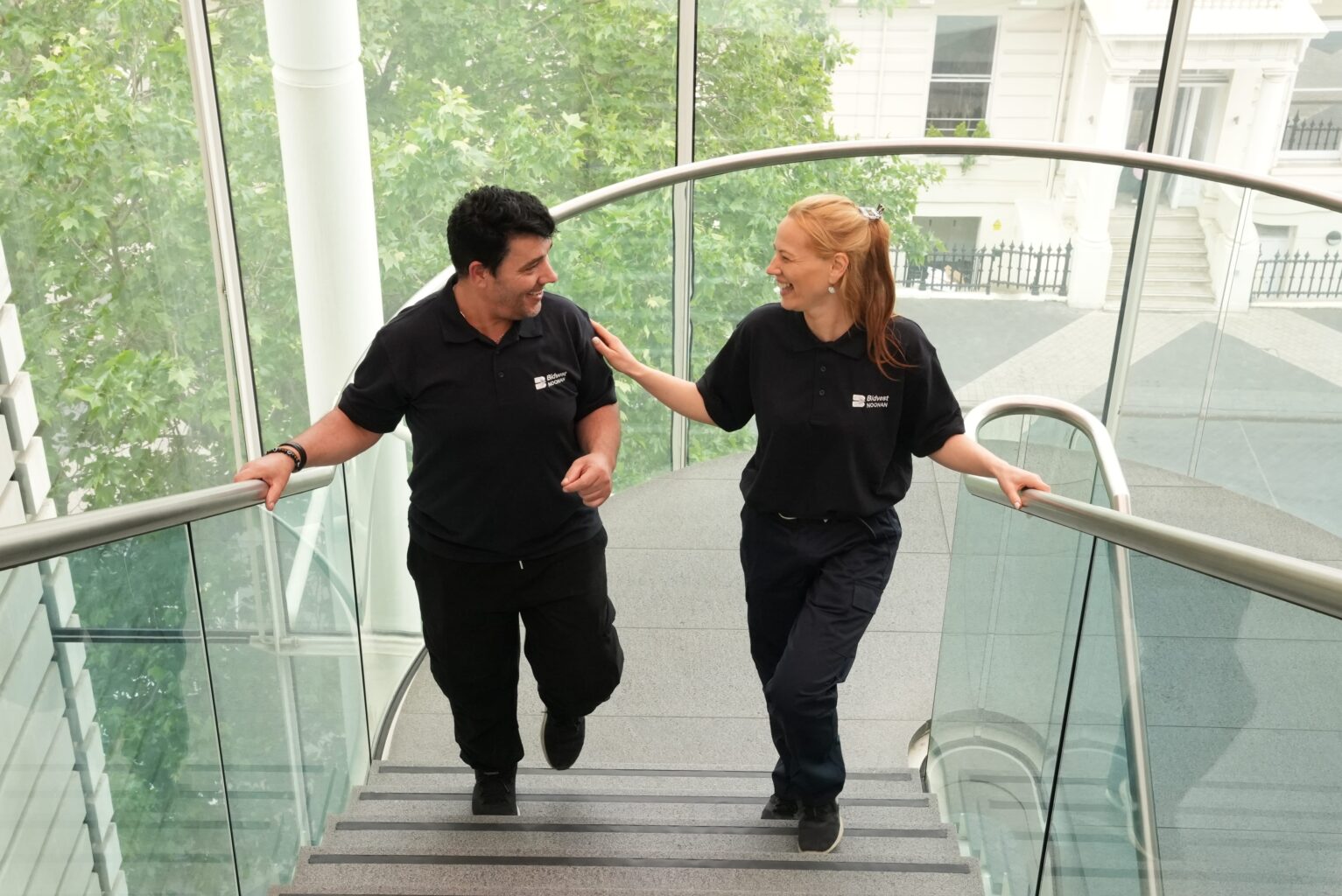
cleaning team of two walking upstairs talking

The Link Between Hygiene and Employee Attendance

A bright, fresh, and well-kept workspace lifts people’s moods. The visual and sensory cues of cleanliness, sparkling floors, fresh air, organised workstations, contribute to a sense of calm and order. When employees return each morning to an environment that feels looked after, it reinforces their pride and sense of belonging.

Studies have consistently shown that a clean and organised environment has a direct impact on employee wellbeing and productivity. A study published in the International Journal of Environmental Research and Public Health found that workers in tidy, well-maintained spaces reported lower stress levels and improved focus, demonstrating that a clutter-free environment can significantly enhance cognitive performance and job satisfaction. This emotional connection matters. Employees who feel valued and comfortable in their surroundings are more motivated to go the extra mile. They’re more likely to collaborate, innovate, and contribute ideas that drive progress. Conversely, a neglected office can quietly chip away at morale, making it harder to maintain enthusiasm and attract top talent.

Reliable service delivery plays a crucial role here. Market-leading cleaning solutions today rely not only on professionalism but also on advanced technologies and data-driven strategies to deliver consistent results. By utilising tools like autonomous cleaning robots, smart sensors, and data led dynamic cleaning, companies can adapt quickly to the needs of modern workplaces. Whether that means adjusting schedules to accommodate hybrid working or using eco-friendly cleaning products to align with sustainability goals, great service is about understanding people as much as it is about maintaining facilities.

The Advantage of a Clean Office for Productivity

Ultimately, the relationship between cleanliness and productivity is undeniable. A clutter-free, hygienic, and well-lit workspace supports concentration, reduces stress, and minimises distractions. Employees who feel physically comfortable and safe can devote more energy to creativity, problem-solving, and collaboration.

Reliable cleaning partners don’t just maintain spaces, they enhance performance. Leveraging the latest technology transforming the cleaning industry, they create environments that are cleaner, safer, and better aligned with organisational standards.

Businesses that treat clean office productivity as a strategic priority gain a measurable edge. They experience lower absenteeism, higher morale, and better retention rates. They also project a strong brand image to clients and visitors, demonstrating that professionalism and care are embedded in every detail.In today’s competitive landscape, where employee experience is a key differentiator, investing in cleanliness is an investment in people. Clean spaces help people think clearly, feel valued, and perform confidently, the foundation of every thriving business, which is what every successful company needs.

Making Cleanliness a Strategic Priority

Corporate cleaning should not be viewed as a background task or an optional expense. It’s a strategic function that directly influences wellbeing, engagement, and productivity. By partnering with professional corporate cleaning services, businesses can ensure their spaces consistently meet the highest standards, reflecting their brand values while fostering a healthier, happier workforce.

As the nature of work continues to evolve, the importance of reliable, high-quality cleaning will only grow. Clean offices build trust, inspire pride, and enable performance. They help employees feel comfortable and confident, knowing that their health and environment are a priority.

A clean workplace isn’t just good for business; it’s essential for building a culture where people can thrive. To find out more about how our services can help your corporate environment, contact our expert team today.

Filed Under: Expertise Tagged With: cleaning, corporate

  • Page 1
  • Page 2
  • Page 3
  • Page 4
  • Go to Next Page »

Footer

Our Services

  • FM Service Transformation
  • Technical Services
  • Security Services
  • Cleaning Services
  • Electronic Security
  • Facilities Management
  • Industrial Cleaning Services
  • TwinSpace

Connect with us

  • Facebook
  • LinkedIn

Important Information

  • Our Registered Offices
  • Whistle Blowing
  • Gender Pay Gap
  • Modern Slavery Statement
  • Privacy Notice
  • Cookie Policy
  • Accessibility Statement
  • Corporate Governance

Get in Touch

  • Careers
  • Contact Us
  • Employee Portal

Our Offices

London Dashwood House, 69 Old Broad Street
London, EC2M 1QS
United Kingdom
Tel: 00 44 (0) 203 319 1750
Belfast Unit 7 Edgewater Business Park
Belfast, Co. Antrim, BT3 9JQ
United Kingdom
Tel: 00 44 (0) 2890774799
Dublin Airside Green, Airside Business Park,
Swords, Co. Dublin K67 Y7W9
Ireland
Tel: 00 353 (0) 1 8839800

Copyright © 2025 · Bidvest Noonan · PSA No. 02264