
Few sectors are investing in digitalisation as seriously as life sciences. Yet it is also a sector that adopts innovative technology carefully and deliberately. In an environment where a change that goes unnoticed can affect a product people depend on, moving slowly is not caution for its own sake; it is good practice. Any new digital system has to earn its place and be qualified and validated before it goes near a live area.
The same discipline should shape how a service partner approaches technology. The opportunity is not to add technology where it isn’t needed, or to change how a manufacturer validates and runs its controlled environment. It is to build capability that complements existing GMP sanitisation and cleaning practices, and that makes the delivery of the work more consistent, efficient, and to a higher standard.
Brian Maguire, Director, Life Sciences, shares his thinking on how we are approaching this, and why it should make the work better, not just easier.
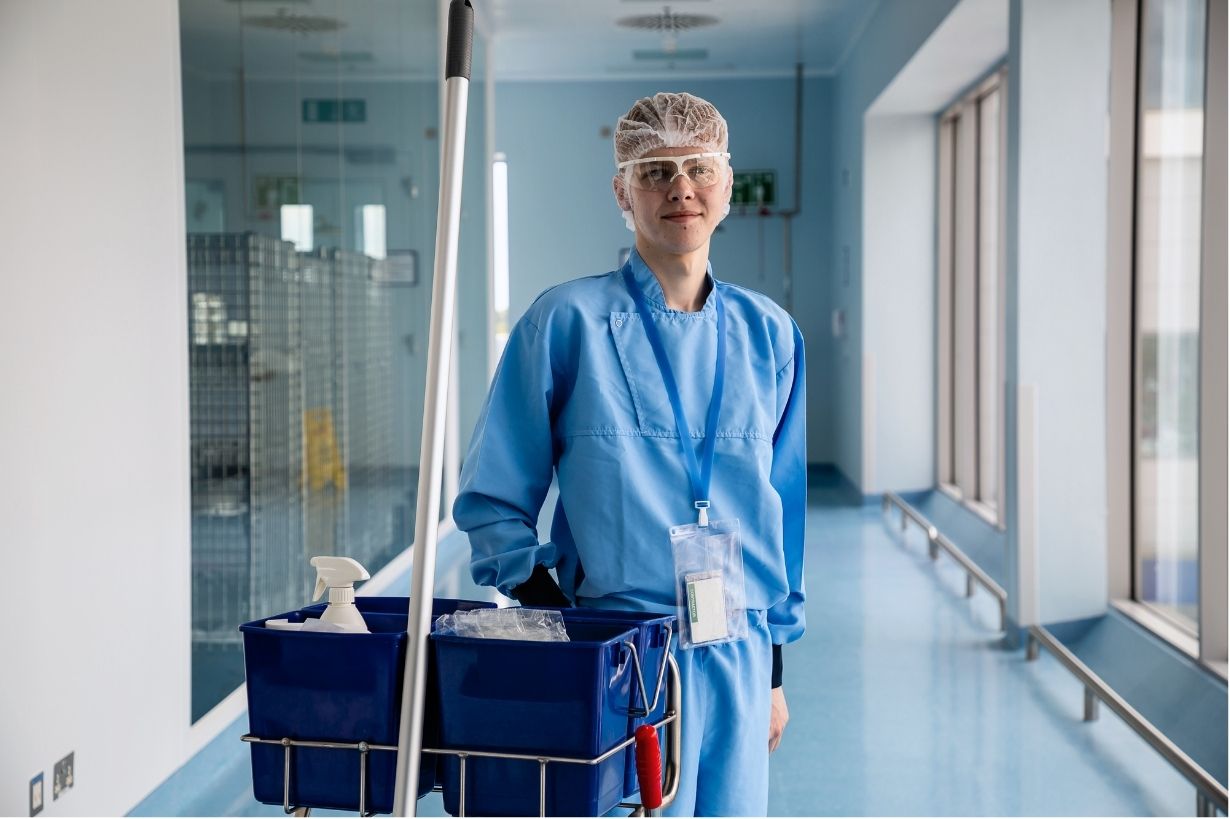
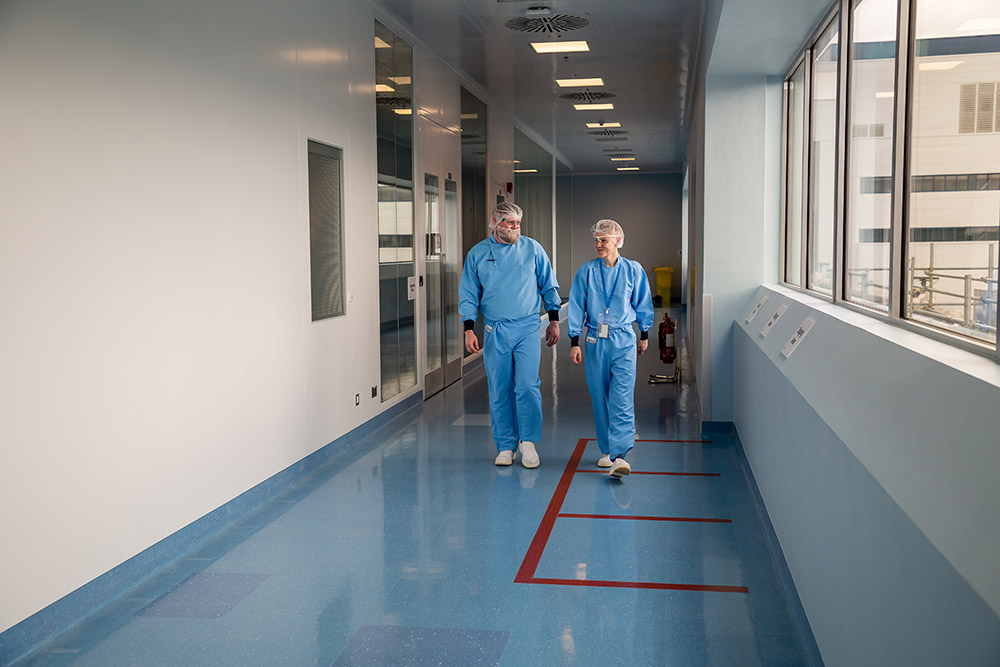
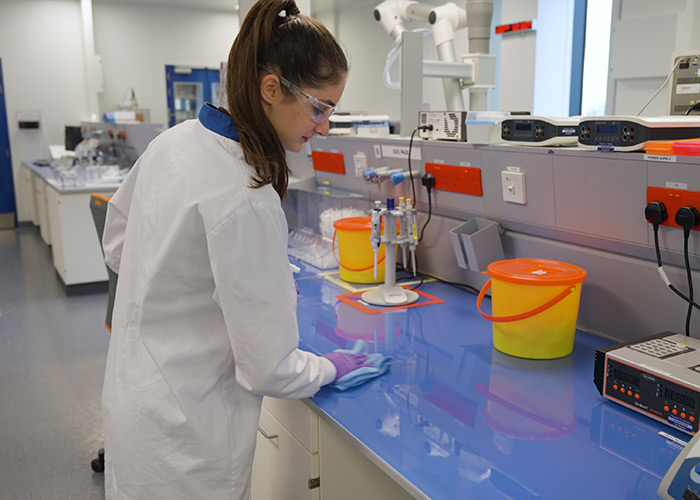
Building capability that fits the environment
The organisations we work use carefully developed and well-established systems of their own. They set the procedures, they hold the validated records, and they define the standard the work is held to inside their GMP-controlled environments, in line with their GxP requirements. What we are building is there to support it: our own digital operations platform, TASK, designed around the realities of a controlled environment rather than bolted on to them. Its role is to make sure colleagues within these areas follow the right client-defined process, in the correct sequence of cleaning and disinfection, understand why it matters for GxP compliance, and that we can demonstrate the work was carried out to highest standard achievable.
There is a fair concern, whenever technology enters careful work, that it becomes a box-ticking exercise: people stop thinking and simply tap a screen. If that were all a system did, it would make the work worse. Used properly, the effect is the opposite. When the correct step is in front of someone at the moment they need it, and what they have done is captured as they do it, there is less room to drift. The standard does not drop. It becomes harder to walk past.
Turning a hundred-page procedure into something people can follow
A cleaning SOP on a life sciences site can run well past a hundred pages, all of it technical and none of it open to interpretation. Expecting someone to hold all of that in their head and apply it perfectly, every time and often under time pressure, is a great deal to ask.
TASK lets us manage the information required by our operatives and present in clear steps, and in the right order, with nothing removed from the standard itself. It also gives GMP leads assurance that operatives are delivering the procedure correctly and in the manner the SOP defines. Just as importantly, it lets us present the work in a way people genuinely understand. Our teams come from many different backgrounds, and English is not always a first language. GMP terminology and dense regulatory wording are a real barrier to getting a task exactly right, so we break it down into plain, clear instruction, available in a way that works for the person carrying it out. Understanding this improves the standard far more reliably and this is where a digital approach earns its place: it closes the gap between what a procedure says and what a person understands.
Keeping the proof beside the work
In controlled and GxP environments, contamination control depends on being able to show what was done, not just that it was done, and the closer the record sits to the job, the more it can be trusted. TASK captures the work as it happens, what was cleaned, when, and by whom, forming a reliable audit trail rather than relying on a write-up at the end of a shift. The record is built as the work is done, not reconstructed afterwards, which is what data integrity really means in practice. Alongside it sits a clear view of who is trained and to what level, so the people in each area are the people who should be there.
That has real operational value. A room returning to production without delay depends on the clean being right first time and signed off without question, which supports faster room turnaround and protects against operational downtime. Consistent, well-followed process supports the safety of our own people, and a record captured in real time means that if a query is ever raised, it can be traced to the exact task, the operator and the time, rather than pieced together after the fact. That makes a deviation far easier to investigate and reduces the risk of an audit observation. In a sector where an inspection can arrive at short notice, the evidence being already in place, and accurate, is worth a great deal.
Where this is heading
The real value is not in any single tool, but in integrating systems: bringing the information gathered across preparation, delivery, and evidence into one logical view. When the way we prepare and develop our people connects with how the work is carried out and evidenced, a person’s understanding of the work and the proof of how they performed the task stops being separate systems and becomes one singular process. That is what we are building toward: not technology for its own sake, but a workforce that understands the why behind every task, working to a standard that can be shown at any moment, and held consistently in a sector where it can never slip.