• Skip to primary navigation
  • Skip to main content
  • Skip to footer
Bidvest Noonan

Bidvest Noonan

A leading provider of Facilities Management Servicess

  • Sectors
        • Our Sector Expertise

        • Healthcare
        • Education
        • Transport
        • Central & Local Government
        • Life Sciences
        • Food Manufacturing
        • Retail
        • Real Estate
        • Corporate
        • London Security
  • Services
        • Single, Bundled, and Integrated Service Solutions

        • Security Services
        • Technical Services
        • Risk and Security Consultancy
        • Energy Management
        • Cleaning Services
        • Electronic Security
        • Transport Cleaning
        • Reception Services
        • Facilities Management
        • Industrial Cleaning
        • TwinSpace
        • FM Service Transformation
  • Sustainability
  • About Us
        • Leadership
        • Our Purpose
        • Accreditations
        • ED&I
        • News Room
        • Digital Operations Platform
  • Innovation
  • Contact Us
        • Build a career with us

          Do you share our passion for creating safer and healthier communities?

        • Careers
        • Get a Quote

          We can design the perfect solution for your business, helping you achieve your objectives.

        • Contact Us

Innovation

What the FM industry must do now ahead of Martyn’s Law coming into force

March 30, 2026 by Cinara

An Expert View from Russell Dean, Director of Operations, Bidvest Noonan

As the Terrorism (Protection of Premises) Act 2025 – commonly known as Martyn’s Law moves closer to implementation, facilities management and security companies are preparing for its impact.

The legislation represents a fundamental shift in how we approach public safety and facilities management companies must be at the forefront of that change.

At Bidvest Noonan, we aim to support clients in strengthening existing security arrangements and preparing for future requirements in a proportionate way.

Current status of implementation

The actual date is not yet known, but Martyn’s Law is expected to come into force in 2027. The Home Office is developing detailed statutory guidance, expected in Summer 2026. The legislation introduces a tiered approach: the Standard Tier applies to premises with a capacity of 200 – 799 people, while the Enhanced Tier covers venues accommodating 800 or more. Those responsible for qualifying premises – including retail spaces, educational institutions, and healthcare facilities – are expected to implement proportionate preparedness measures. Specific requirements will be confirmed once Home Office guidance is published.


Essential preparations

Organisations may wish to review existing risk assessments and preparedness processes while awaiting formal statutory guidance. This means identifying vulnerabilities across a range of plausible attack methods in line with proportionate, risk-based planning – from known threats such as Vehicle as a Weapon (VAW) attacks to new methods that may emerge in the future.

Equally important is building a culture where staff feel confident recognising concerns, escalating early, and understanding their role in wider preparedness. Culture and behaviour are repeatedly highlighted as more critical than equipment in major incident reviews.

Training is therefore paramount. The “Platinum 10 Minutes” is existing emergency response best practice (rather than specific to Home Office Martyn’s Law documentation) but it’s pertinent in this context. It’s that critical window immediately following an incident, and it can mean the difference between life and death. Security and operational teams benefit from practical, scenario-based training that reinforces clear communication and swift escalation. Terror incidents unfold in seconds, not minutes, demanding immediate, decisive action.

Standard Tier premises are anticipated to focus on core preparedness measures, such as staff awareness and emergency procedures, pending final guidance. Enhanced Tier venues are likely to have additional responsibilities, expected to include more formal planning and record keeping, subject to Home Office guidance.

Available resources

ProtectUK offers sector-specific advice, while organisations can access specialist training programmes designed to align with the new legislative framework.

At Bidvest Noonan, we’ve developed a Protective Security Training Programme in-house, incorporating live simulations in real environments, ensuring our teams can deliver the rapid, coordinated responses that Martyn’s Law may demand. Future training modules will expand to cover bladed-weapon attacks, hostile intruder events, and suspicious-package protocols, providing a comprehensive approach to threat readiness.


Filed Under: Expertise, Innovation, Latest News Tagged With: innovationheader, key-content, pressrelease, security

AI Governance Is Changing Fast: What Organisations Need to Know

March 30, 2026 by Cinara

Olga Mitropoulou, Bidvest Noonan’s Director of Risk & Compliance, shares her expert insight

AI regulation is maturing rapidly across both Ireland and the United Kingdom. Each jurisdiction is taking an ambitious but distinct approach to governance, oversight and digital transformation. Whether your organisation operates in one market or both, these developments matter, because they are changing compliance expectations.

My team and I are tracking how these evolving frameworks will shape both our own operations and the services we deliver. Here is what is happening, and what it means in practice.

Ireland: Building a Trusted Digital Regulatory Hub

Ireland’s updated National Digital and AI Strategy sets out 90 cross-government actions focused on digitalisation, AI governance and national capability building. Central to this is the full digitalisation of key public services by 2030, with 90% delivered online, alongside the creation of a national AI Office responsible for coordinating implementation of the EU AI Act and establishing an AI Regulatory Sandbox.

The strategy also introduces the Observatory for Business AI Readiness (OBAIR) and nationwide AI literacy and SME upskilling campaigns, as well as a new Cyber Security Research Centre of Excellence and enhanced resourcing of digital regulators. Ireland has seen surging AI adoption across industry, with 91% of organisations adopting AI by 2025 and major government investment in sectoral innovation and enterprise support.

For organisations operating in Ireland, this signals a clear move towards stronger compliance and greater transparency. With the new AI Office assuming central oversight, AI-enabled tools used in service delivery will face increased scrutiny and more detailed reporting obligations. The EU AI Act will require robust risk assessments, clear transparency and demonstrable human oversight for higher-risk applications. In regulated sectors in particular, there will be growing expectations around governance, accountability and data protection, with greater emphasis on strong supplier assurance and well-documented AI processes.

At the same time, these changes create real opportunities. National AI literacy initiatives and insights from OBAIR will help organisations and their partners adopt AI responsibly. Participation in regulatory sandboxes and government-supported pilots opens the door to exploring innovative technologies across security, facilities management, automation and workforce management.

The United Kingdom: Strengthening Oversight of Advanced AI

The UK continues to deliver on its long-term National AI Strategy, but recent policy shifts signal a significant move towards stronger regulation, particularly for high-risk and frontier AI systems. The AI Opportunities Action Plan is accelerating AI adoption, increasing compute capacity and targeting the upskilling of 10 million workers by 2030.

A proposed Frontier AI Bill would give the AI Safety Institute (now the AI Security Institute) statutory powers to require testing, technical documentation and pre-market oversight of advanced AI systems. Sector-specific regulation is being reinforced, aligned to a principles-based framework but increasingly backed by binding duties. There is also a renewed focus on AI-enabled cyber threats, advanced model evaluation and national security considerations. The direction of travel is visible in specific sectors. The UK Government’s recent policing White Paper commits £115 million over three years to the responsible adoption of AI across all 43 police forces in England and Wales, including the creation of a National Centre for AI in Policing (Police.AI) and a public register of AI tools in use. This is a clear example of AI governance moving from principles into operational reality, with structured testing, oversight and transparency requirements built in from the outset.

For organisations in the UK, this evolving landscape means preparing for enhanced due diligence of AI suppliers, more stringent technical assurance and ongoing model monitoring obligations. The expanded focus on AI safety and cyber-risk research highlights the importance of strengthening cybersecurity posture, especially where AI tools support physical security, monitoring or decision-support services. AI procurement will need to align increasingly with strict threat-modelling standards as the emphasis on preventing AI-enabled cyberattacks and misuse grows.

What This Means for Organisations

Regardless of jurisdiction, the direction of travel is consistent: expectations around AI governance, supply chain transparency and demonstrable compliance are rising. Organisations that rely on outsourced services are increasingly being asked to show that their partners meet robust standards for responsible AI use, data protection and cyber resilience.

Contractual requirements are becoming more demanding. Regulatory reporting is intensifying. And the question of whether your service providers can evidence their AI governance arrangements is moving from a nice-to-have to a fundamental part of supplier assurance.

How Bidvest Noonan Is Responding

We are integrating EU AI Act obligations and UK oversight expectations into our internal governance, ensuring our organisation and our customers benefit from services that are compliant by design. This includes structured AI impact assessments, supplier assurance, human-oversight measures and clear documentation to support client audits and regulatory reporting.

Both Ireland and the UK emphasise cybersecurity in their strategies, and our teams are prioritising enhanced cyber resilience, data governance practices, and robust incident response readiness. As national strategies invest heavily in AI upskilling and digital capability building, we are also working with clients to identify safe and high-value use cases in automation, analytics, workforce management and service optimisation.

Looking Ahead

Ireland and the UK are both setting ambitious, forward-looking agendas for digitalisation and AI governance. For organisations in every sector, this translates to rising expectations around trust, transparency, security and compliance.

At Bidvest Noonan, we are committed to ensuring that every solution we deliver aligns with these evolving standards. We are strengthening our AI governance framework, embedding rigorous compliance controls and proactively supporting our customers through regulatory change, reinforcing our role as a trusted, innovative and resilient service partner in an increasingly digital world.

Filed Under: Expertise, Innovation, Latest News Tagged With: innovationheader, key-content, security

New research reveals training paradox undermining FM modernisation efforts

March 23, 2026 by Cinara

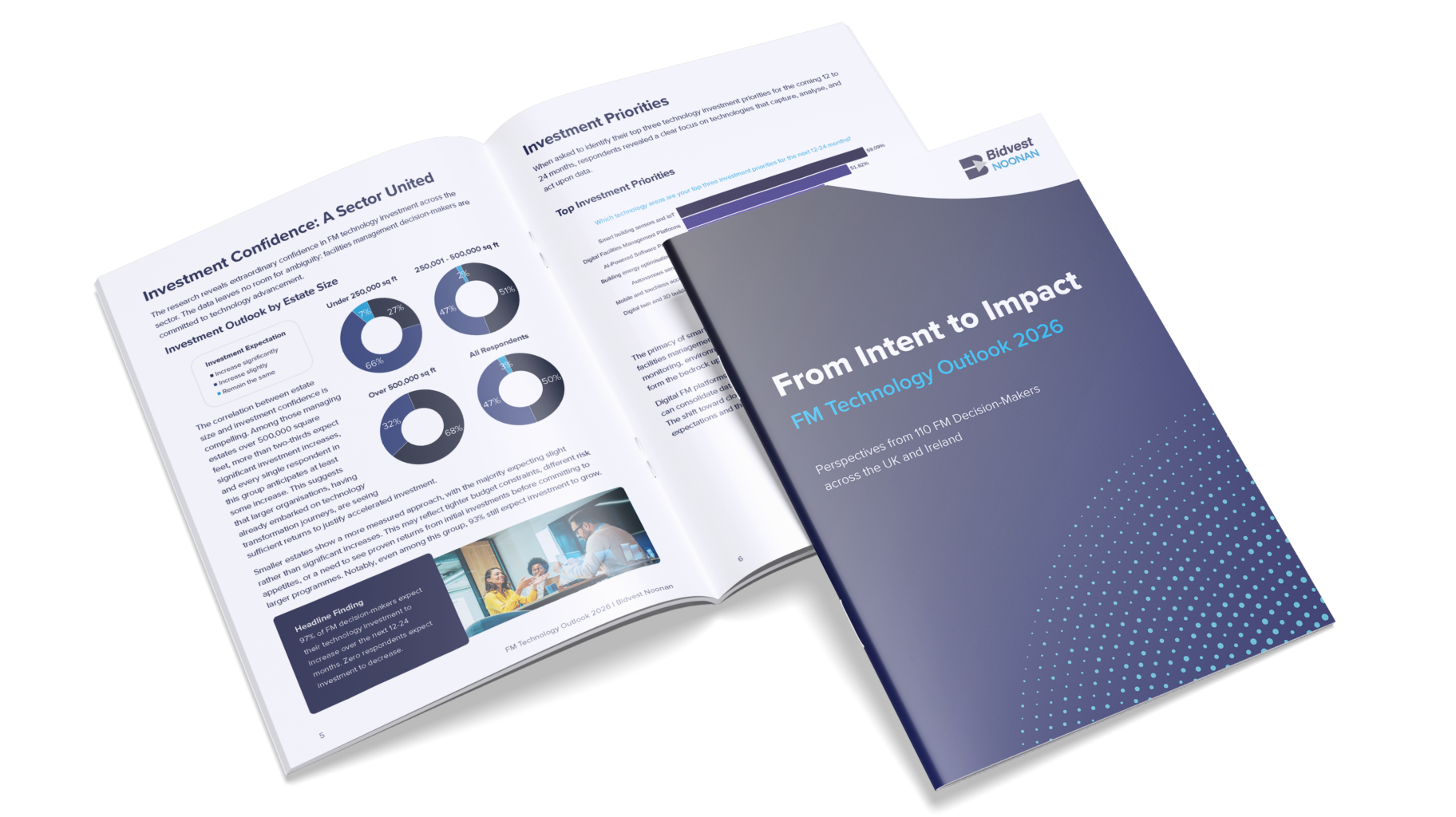
  • 64% of FM leaders cite inadequate training and change management among the primary causes of technology failure, yet only 9% identified it as a critical factor when reflecting on past success
  • 97% of FM decision-makers anticipate increased technology investment in 2026, with smart sensors, digital platforms and AI-powered software emerging as top priorities
  • The underlying issue appears to be capability, not resistance: almost half (46%) identify skills gaps as a current challenge, while only 15% cite staff opposition to change

Bidvest Noonan has published new research highlighting a significant gap between technology ambition and successful adoption in the FM sector.

Bidvest Noonan surveyed 110 senior FM decision-makers with authority over technology investment, managing estates ranging from 20,000 to over 500,000 square feet across the UK and Ireland. The findings reveal that human factors, not technology itself, are key limitations to success.

While 64% of FM leaders cite inadequate training and change management as a primary cause of technology underperformance, only 9% identified it as a critical factor when reflecting on technologies that had succeeded. Bidvest Noonan describes this gap as the ‘training paradox’.

The training paradox

Phil Darcy, Head of Data & Emerging Technologies at Bidvest Noonan, said: “Our research reveals a troubling contradiction. When technologies underperform, inadequate training is among the top causes cited, yet it ranks lowest among the factors that organisations prioritise for success. Closing that gap should be a priority for any organisation investing in technology.

“The data shows something important here, almost half of FM leaders identify skills and capability gaps as a major barrier, while only one in seven cite staff resistance to change. This tells us that what looks like resistance is actually a capability issue. People lack confidence in their ability to use new technology effectively, which can result in hesitation or pushback.”

What the full report covers

The full report explores investment priorities across estate sizes, the adoption status of autonomous service robots and digital FM platforms, AI productivity expectations, what distinguishes successful implementations from those that fall short, and the challenges FM leaders currently face in turning technology ambition into operational impact.

Click Here To Read The Full Report

Filed Under: Case Study, Expertise, Innovation, Latest News Tagged With: innovationheader, key-content, pressrelease, sustainability

Award-Winning Innovation Set to Reduce Food Waste Volumes by up to 80% at UCD.

March 9, 2026 by Cinara

Ireland’s largest university, University College Dublin, market-leading facilities management services company Bidvest Noonan, and Ireland’s leading waste-handling solutions company, Ancove, are proud winners of the Public Sector Magazine’s Excellence in Business Awards ‘Best Waste Handling Solution’ award, recognising innovation in on-site waste reduction and environmental performance.

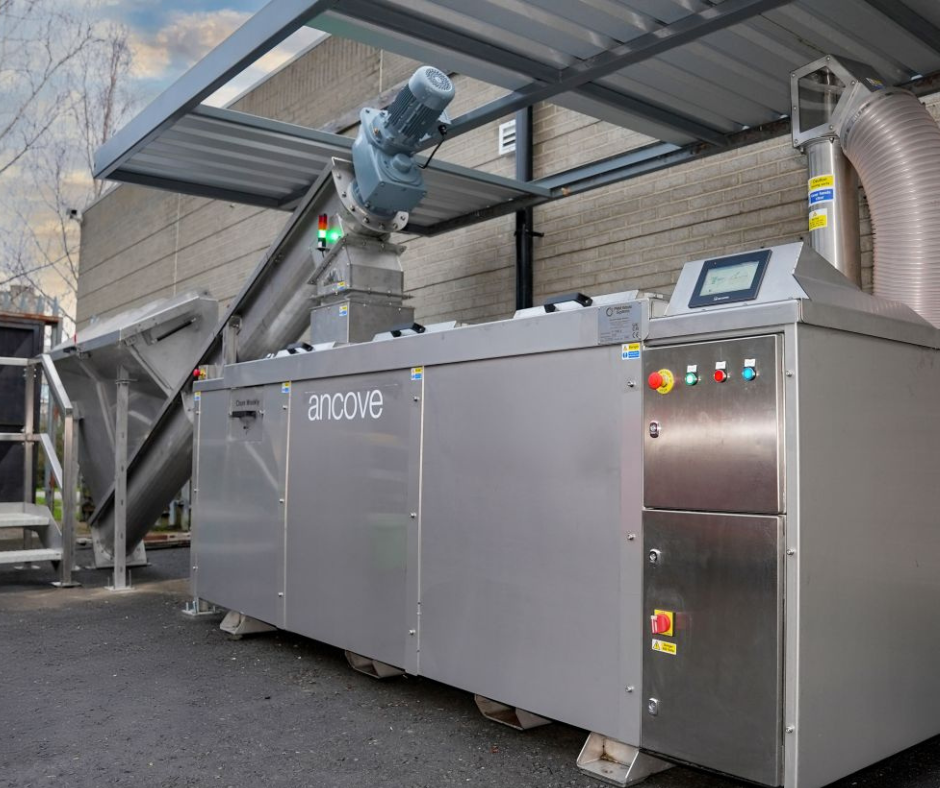
Bidvest Noonan and Ancove support UCD with waste management solutions helping to improve performance and increase efficiency through practical, day-to-day improvements. Most recently, the partnership has delivered a new sustainability initiative focused on food waste: the installation of a cutting-edge, industrial grade bioprocessor designed for a large campus environment.

Positioned close to where food waste is produced, the system is expected to cut food waste volumes by up to 80%, while reducing the storage and transport typically required to manage organic waste at scale.

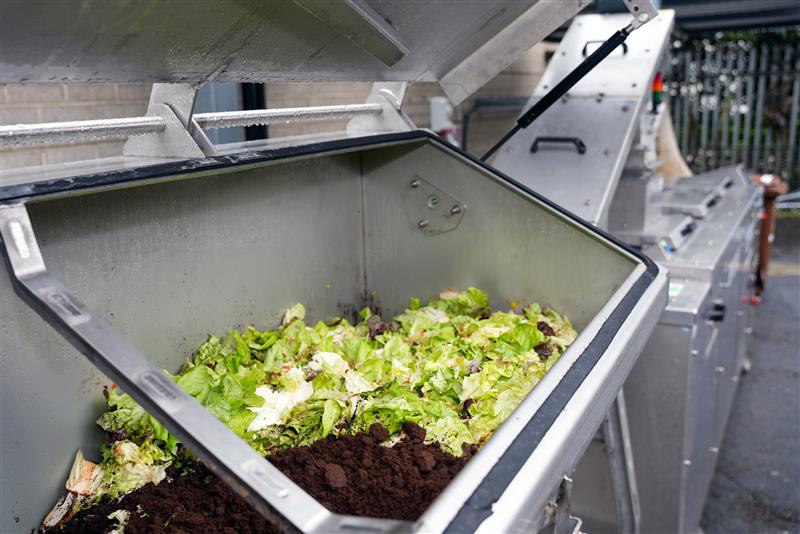
The bioprocessor is capable of digesting up to 1,000 litres of unavoidable food waste and other organic material each day. Operating within a sealed, controlled system, it breaks waste down aerobically using oxygen and microbes, converting organic material into a soil-enriching output. By processing waste on site, the system reduces the volume of material leaving campus and decreases the number of waste collections required.

For a campus of UCD’s scale, the operational benefits are significant. Fewer collections mean fewer vehicle movements, lower associated emissions, and less disruption to day-to-day campus activity. The system also reduces the manual handling involved in food waste management and supports a more circular approach to resource use, helping to divert organic waste away from traditional disposal routes.

The installation forms part of UCD’s broader programme to strengthen environmental performance through applied innovation. It also demonstrates how facilities management and waste-handling expertise can support large institutions in delivering practical sustainability outcomes, while improving efficiency across daily operations. As the system becomes embedded in campus routines, it is expected to contribute to UCD’s wider environmental goals over time, providing a scalable model for on-site organic waste processing.

Filed Under: Expertise, Innovation, Latest News Tagged With: innovationheader, key-content, pressrelease, sustainability

The hidden change underway in today’s workplaces

February 26, 2026 by Cinara

Peter Smyth, Director of Innovation & Technology at Bidvest Noonan, on how new technologies are changing how buildings operate.

For many years, changes in buildings and facilities arrived in steady steps. A new piece of equipment here, an updated procedure there and gradual improvements across sites.

That picture is beginning to change. A group of technologies is influencing how buildings operate, how teams organise their work and how people use the spaces around them. Four areas in particular are shaping much of this progress: automation, IoT sensors, digitalisation and artificial intelligence (AI). What’s different now is the speed and interconnectedness of these changes, driven by rising sustainability demands, cost pressures, and expectations for smarter, safer workplaces.

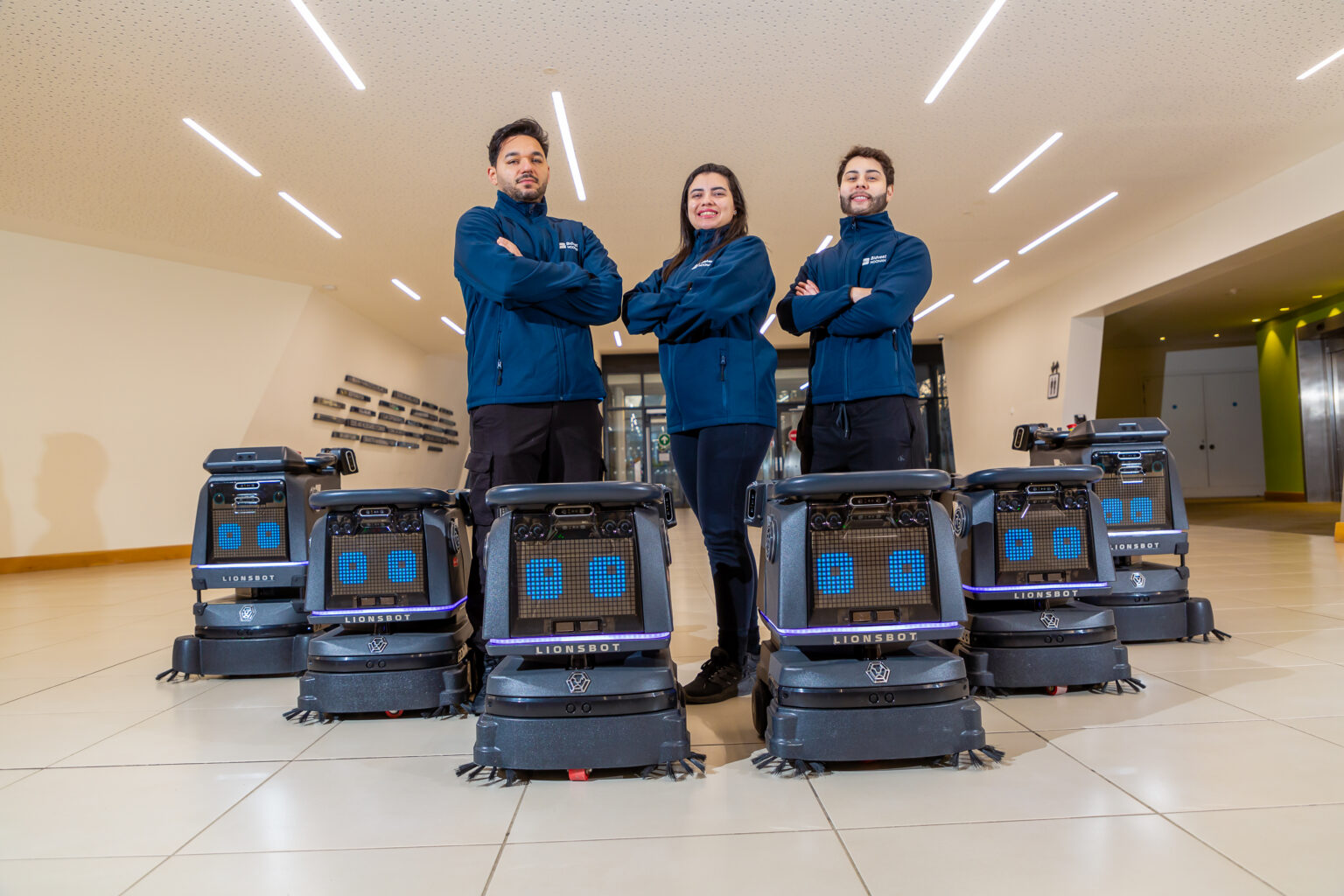
Automation has moved on from production lines and robotic arms. Today, some of the most interesting developments are appearing in far more familiar places: office buildings, hospitals, universities and transport hubs are beginning to use automation in practical and helpful ways, such as robotic cleaning machines.

As automation becomes more common, IoT sensors build awareness of what is happening inside a building, offering a rich and connected view of building activity.

Sensors can now track occupancy, temperature, air quality, water flow, vibration, light levels and other conditions. This allows buildings to respond based on what is happening.

Once organisations begin to collect richer information from sensors and systems, the next challenge is making sense of it all. Digitalisation helps by bringing all the data together in a way that is easy to work with.

One approach is the digital system twin, which helps people see how different components influence one another. If something begins to drift out of range, the model can reveal the knock-on effects, making it easier to pinpoint the problem and respond appropriately.

AI in this activity generates a growing amount of data, but data on its own does not create value. This is where AI is starting to play a distinct role in built environments, sitting inside other systems.

It is a layer of capability that makes other technologies more effective, for example robotic cleaners adjusting routes based on real-time conditions, or digital twins predicting how a system will respond under different loads or identifying early signs of failure.

Few organisations implement all four of these developments at once. Most begin with a single area, see the benefits and then explore the next step. Each development stands on its own and can bring clear value. At Bidvest Noonan, we’re seeing clients gain the most value when these technologies are introduced alongside strong frontline expertise and practical service design.

Together, they show how buildings and facilities are changing. Automation supports teams with routine work. Sensors help buildings sense and respond. Digitalisation gives people a clearer picture of how everything fits together. AI helps that connected environment learn, adapt and improve over time.

None of this replaces the need for experienced facilities and estates professionals. It gives them better tools and better information to manage buildings that are becoming more capable and more essential to how organisations operate. The most effective estates teams will be those who combine human judgement with data-led insight, turning buildings into partners in performance rather than passive infrastructure.

Peter Smyth, Director of Innovation & Technology

Filed Under: Expertise, Innovation, Latest News Tagged With: cleaning, innovationheader, key-content, pressrelease

Bidvest Noonan Becomes First FM Services Company to Introduce New Specialist Cleaning Technology

March 19, 2025 by Content Manager

Bidvest Noonan is the first in its industry across the UK and Ireland to introduce a brand-new range of specialist cleaning technology for its customers. Developed for cleanroom environments, where contamination control is critical, this technology enables the high standards of cleaning required in these spaces to be achieved with greater efficiency than ever before.

The SAFE-T range was developed to meet the needs of a Bidvest Noonan customer, a globally renowned technology brand, that sought a more advanced and specialised solution for its world-class cleanrooms. To support its customer, Bidvest Noonan engaged Clenli Direct, who worked closely with i-Team Global, the manufacturers, to bring the range to market.

“Our strategic partner Bidvest Noonan introduced JLL to Clenli Direct and i-Team Global, their excellent engineers worked with our problem statement and design ideas, this collaboration of engineering and cleanroom expertise has resulted in an innovative product and relationship that we at JLL are proud to be part of.” said Spencer Price, Cleanroom Facilities Manager at JLL.

“We are proud to have played a role in the inception of this new range of technology,” said David Barker, Chief Growth Officer at Bidvest Noonan. “We have a long track record of innovating to help our customers overcome challenges, and strong partnerships have always been central to that success. We were delighted to mark the launch of the SAFE-T range alongside JLL, Clenli Direct and i-Team Global, and we look forward to bringing the benefits of this technology to our customers across the UK and Ireland.”

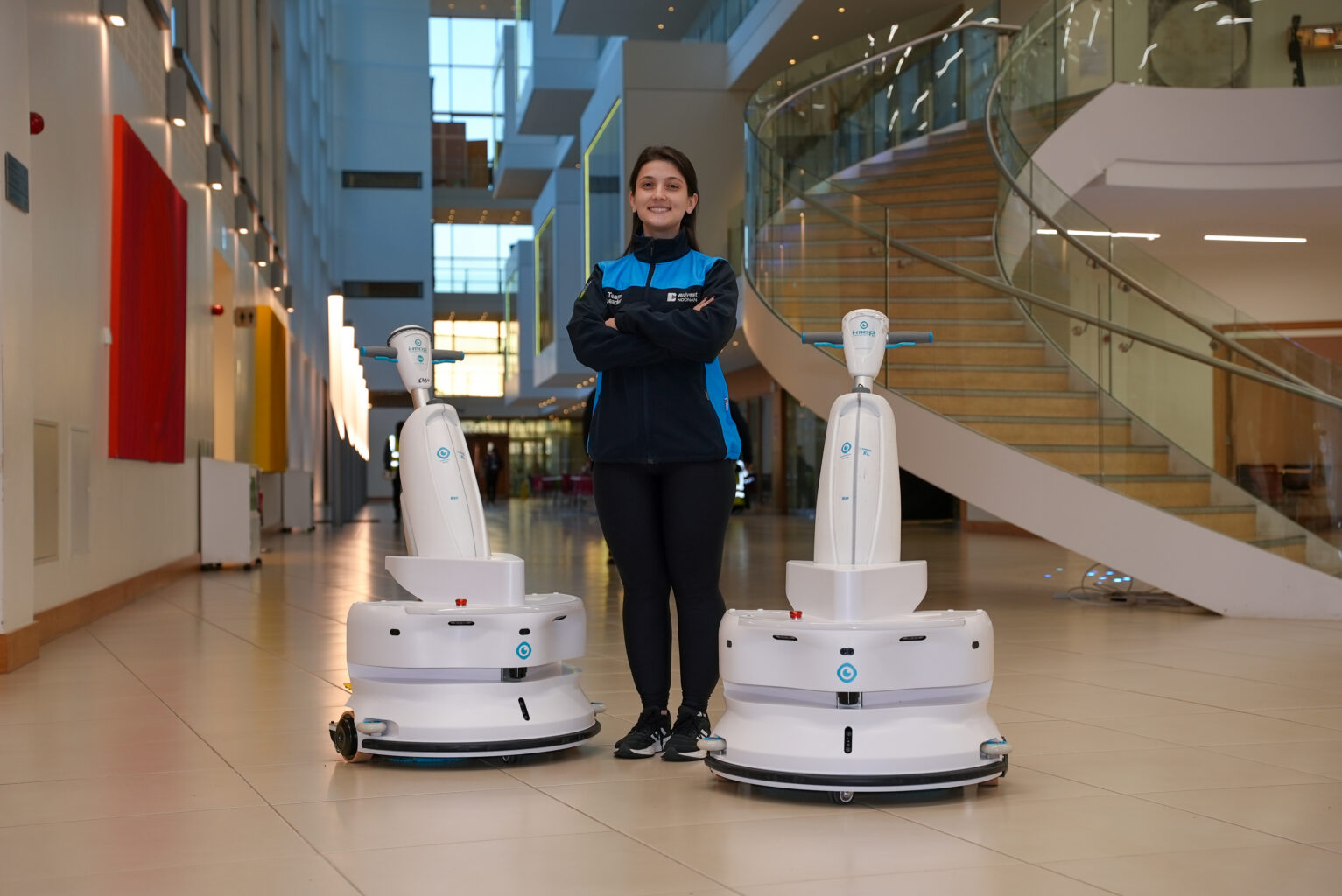
Officially launched in Dublin on 12 March 2025 at an event attended by industry leaders and experts, the SAFE-T line brings vast improvements to cleanroom cleaning. One of the machines in its range is the SAFE-T-IMOP, the first battery-powered scrubber dryer designed for both cleanroom and general use. It reduces cleaning time by up to 50% compared to traditional flat mopping and has been independently tested to meet ISO 14644 cleanroom standards.

Bidvest Noonan’s adoption of this technology reinforces its leadership in the FM industry, particularly in high-tech and regulated sectors such as pharmaceuticals, manufacturing, technology, and life sciences.

Filed Under: Innovation Tagged With: cleaning, innovationheader, key-content, pressrelease

  • Page 1
  • Page 2
  • Page 3
  • Interim pages omitted …
  • Page 5
  • Go to Next Page »

Footer

Our Services

  • FM Service Transformation
  • Technical Services
  • Security Services
  • Cleaning Services
  • Electronic Security
  • Facilities Management
  • Industrial Cleaning Services
  • TwinSpace

Connect with us

  • Facebook
  • LinkedIn

Important Information

  • Our Registered Offices
  • Whistle Blowing
  • Gender Pay Gap
  • Modern Slavery Statement
  • Privacy Notice
  • Cookie Policy
  • Accessibility Statement

Get in Touch

  • Careers
  • Contact Us
  • Employee Portal

Our Offices

London Dashwood House, 69 Old Broad Street
London, EC2M 1QS
United Kingdom
Tel: 00 44 (0) 203 319 1750
Belfast Unit 7 Edgewater Business Park
Belfast, Co. Antrim, BT3 9JQ
United Kingdom
Tel: 00 44 (0) 2890774799
Dublin Hilton House, Unit 3, Swords Business Park Swords, Co. Dublin, K67 X971
Ireland
Tel: 00 353 (0) 1 8839800

Copyright © 2025 · Bidvest Noonan · PSA No. 02264

Cookie Notice
We use cookies to give you the best experience on our website. Some cookies are strictly necessary for the functionality of the website. We may use non-essential cookies to enhance your experience by remembering your preferences and repeat visits. For more information about the cookies used and how to withdraw your consent anytime, please refer to our Cookie Policy and our Privacy Policy
Accept All Reject All
Manage consent

Privacy Overview

This website uses cookies to improve your experience while you navigate through the website. Out of these, the cookies that are categorized as necessary are stored on your browser as they are essential for the working of basic functionalities of the website. We also use third-party cookies that help us analyze and understand how you use this website. These cookies will be stored in your browser only with your consent. You also have the option to opt-out of these cookies. But opting out of some of these cookies may affect your browsing experience.
Necessary
Always Enabled
Necessary cookies are absolutely essential for the website to function properly. These cookies ensure basic functionalities and security features of the website, anonymously.
CookieDurationDescription
cookielawinfo-checkbox-advertisement1 yearSet by the GDPR Cookie Consent plugin, this cookie is used to record the user consent for the cookies in the "Advertisement" category .
cookielawinfo-checkbox-analytics1 yearSet by the GDPR Cookie Consent plugin, this cookie is used to record the user consent for the cookies in the "Analytics" category .
cookielawinfo-checkbox-functional1 yearThe cookie is set by the GDPR Cookie Consent plugin to record the user consent for the cookies in the category "Functional".
cookielawinfo-checkbox-necessary1 yearSet by the GDPR Cookie Consent plugin, this cookie is used to record the user consent for the cookies in the "Necessary" category .
cookielawinfo-checkbox-others1 yearSet by the GDPR Cookie Consent plugin, this cookie is used to store the user consent for cookies in the category "Others".
cookielawinfo-checkbox-performance1 yearSet by the GDPR Cookie Consent plugin, this cookie is used to store the user consent for cookies in the category "Performance".
CookieLawInfoConsent1 yearRecords the default button state of the corresponding category & the status of CCPA. It works only in coordination with the primary cookie.
JSESSIONIDsessionThe JSESSIONID cookie is used by New Relic to store a session identifier so that New Relic can monitor session counts for an application.
PHPSESSIDsessionThis cookie is native to PHP applications. The cookie is used to store and identify a users' unique session ID for the purpose of managing user session on the website. The cookie is a session cookies and is deleted when all the browser windows are closed.
viewed_cookie_policy1 yearThe cookie is set by the GDPR Cookie Consent plugin to store whether or not the user has consented to the use of cookies. It does not store any personal data.
Functional
Functional cookies help to perform certain functionalities like sharing the content of the website on social media platforms, collect feedbacks, and other third-party features.
CookieDurationDescription
__cf_bm30 minutesThis cookie, set by Cloudflare, is used to support Cloudflare Bot Management.
_zcsr_tmpsessionZoho sets this cookie for the login function on the website.
Performance
Performance cookies are used to understand and analyze the key performance indexes of the website which helps in delivering a better user experience for the visitors.
Analytics
Analytical cookies are used to understand how visitors interact with the website. These cookies help provide information on metrics the number of visitors, bounce rate, traffic source, etc.
CookieDurationDescription
_ga2 yearsThe _ga cookie, installed by Google Analytics, calculates visitor, session and campaign data and also keeps track of site usage for the site's analytics report. The cookie stores information anonymously and assigns a randomly generated number to recognize unique visitors.
_ga_V2JKVZK6002 yearsThis cookie is installed by Google Analytics.
_gat_gtag_UA_231339401_11 minuteSet by Google to distinguish users.
_gid1 dayInstalled by Google Analytics, _gid cookie stores information on how visitors use a website, while also creating an analytics report of the website's performance. Some of the data that are collected include the number of visitors, their source, and the pages they visit anonymously.
iutk5 months 27 daysThis cookie is used by Issuu analytic system to gather information regarding visitor activity on Issuu products.
vuid2 yearsVimeo installs this cookie to collect tracking information by setting a unique ID to embed videos to the website.
Advertisement
Advertisement cookies are used to provide visitors with relevant ads and marketing campaigns. These cookies track visitors across websites and collect information to provide customized ads.
Others
Other uncategorized cookies are those that are being analyzed and have not been classified into a category as yet.
CookieDurationDescription
45342b9b1esessionNo description
ZCAMPAIGN_CSRF_TOKENsessionNo description available.
Save & Accept