
From Intent to Impact
Facilities Management Technology Outlook 2026
Perspectives from 110 FM Decision-Makers in the UK & Ireland
Foreword
“Facilities management is entering a defining phase in its relationship with technology. The question is no longer whether organisations will invest, but how effectively those investments translate into real operational impact.
We commissioned this research to move beyond theory and vendor rhetoric, and to understand what is happening on the ground. What are FM leaders actually investing in? What is delivering value? And, just as importantly, where are organisations falling short despite strong intent?
The perspectives shared by 110 senior FM decision-makers across the UK and Ireland reveal a sector that is confident, ambitious, and increasingly data-led. Investment is accelerating across sensors, platforms and AI, yet the findings also highlight a consistent truth: technology success is determined as much by execution, integration and capability as it is by the tools themselves.
One insight stands out clearly. While technology investment is rising, the human and organisational elements of adoption are too often underestimated. The gap between intention and impact is rarely caused by a lack of technology, but by how well it is planned, embedded and supported. Leadership, clarity of purpose, and capability development remain decisive factors.
This report is intended to be practical and reflective. It offers evidence-based insight for FM leaders navigating complex investment decisions, and highlights where attention is most needed to convert ambition into measurable outcomes.“

Cormac Sheils, Chief Operating Officer, Bidvest Noonan

Executive Summary
The facilities management sector has reached a decisive moment: 97% of decision-makers expect technology investment to increase, and not a single respondent expects it to decrease. Our survey of 110 qualified FM decision-makers across the UK and Ireland reveals an industry united in its commitment to technology, yet the research also exposes what separates successful implementations from the rest.
The sector has moved beyond whether to invest and is now focused on how to do so successfully. Investment priorities centre on data capture and intelligence. Sensors and IoT provide the foundation, digital platforms consolidate and contextualise that data, and AI-powered analytics extract actionable intelligence from it. This three-layer strategy is emerging consistently across the sector.
The most striking insight concerns the human side of adoption. Staff training ranks lowest among success factors at 9%, yet inadequate training is cited as a cause of failure by 64%. This gap represents one of the most significant opportunities identified in this study.
The research reveals further nuance. Only 15% cite staff resistance as a current challenge, yet 59% identify it as a factor in past underperformance. Meanwhile, 46% cite skills gaps as a present concern. The barrier is often capability and confidence, not opposition to change.
Key Findings at a Glance
- 97% expect technology investment to increase; 0% expect any decrease
- Staff training ranks last in success factors (9%), yet 64% cite inadequate training among causes of failure
- Larger estates lead:68% of those over 500,000 sq ft expect significant investment increases
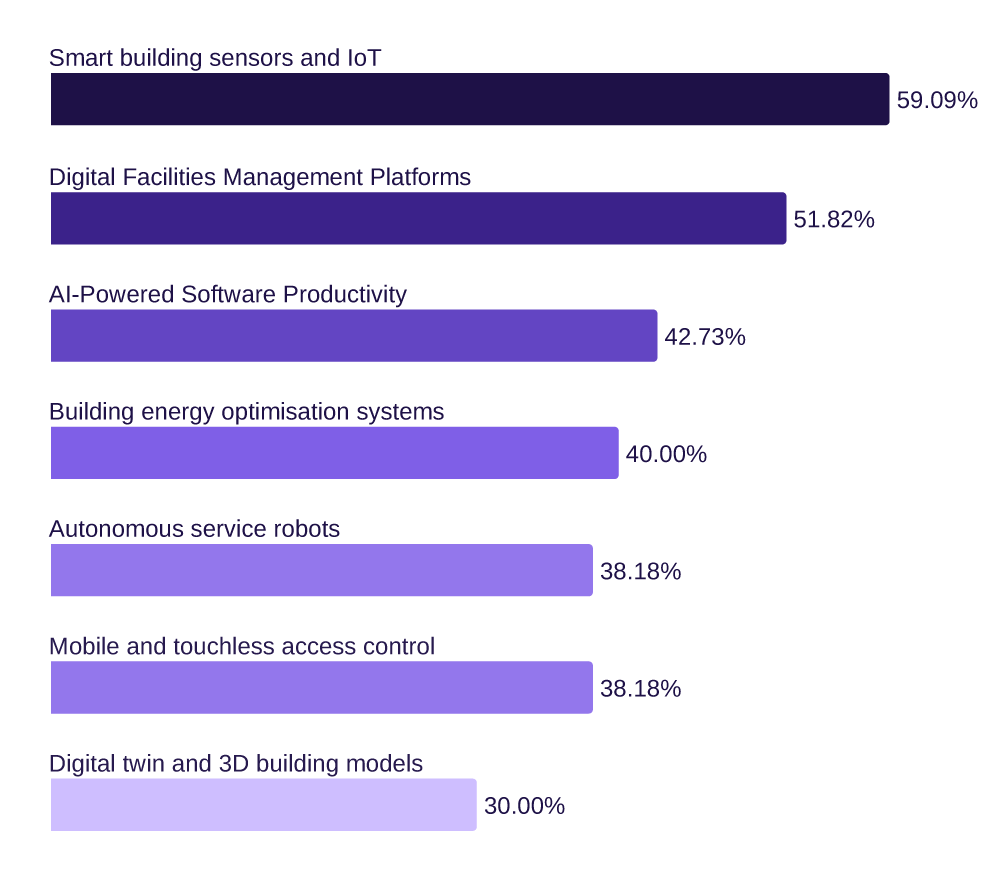
- Smart building sensors and IoT top investment priorities (59%), followed by Digital FM Platforms (52%)
- 95% expect AI to deliver productivity gains of at least 10% by 2030;56% expect 20% or more
Research Methodology
This research was designed to capture the perspectives of those with genuine authority and insight into FM technology decisions. The survey methodology employed multiple qualification filters to ensure respondent quality.
Qualification Criteria
All respondents were required to meet four essential criteria. First, they must hold a senior role with facilities management responsibility, including Facilities Directors, Operations Directors, Estates Managers, Technical Services Managers, or Procurement Managers with FM oversight. Second, they must have decision-making authority, with 65% making final technology decisions and 33% significantly influencing them. Third, they must manage estates of scale, with all respondents responsible for facilities of at least 20,000 square feet. Fourth, all facilities must be located within the UK and Ireland. Responses completed in under four minutes were excluded from the analysis to ensure data quality. The average completion time was 12 minutes.
Sample Profile
| Estate Size | Respondents | Percentage |
|---|---|---|
| Over 500,000 sq ft | 37 | 34% |
| 250,001–500,000 sq ft | 43 | 39% |
| Under 250,000 sq ft | 30 | 27% |
The sample provides robust representation across estate sizes, enabling meaningful analysis of how organisational scale influences technology perspectives and priorities. The distribution ensures that findings reflect the experiences of both large enterprise estates and mid-sized operations.

Investment Confidence: A Sector United
The research reveals extraordinary confidence in FM technology investment across the sector. The data leaves no room for ambiguity: facilities management decision makers are committed to technology advancement.
Investment Outlook by Estate Size
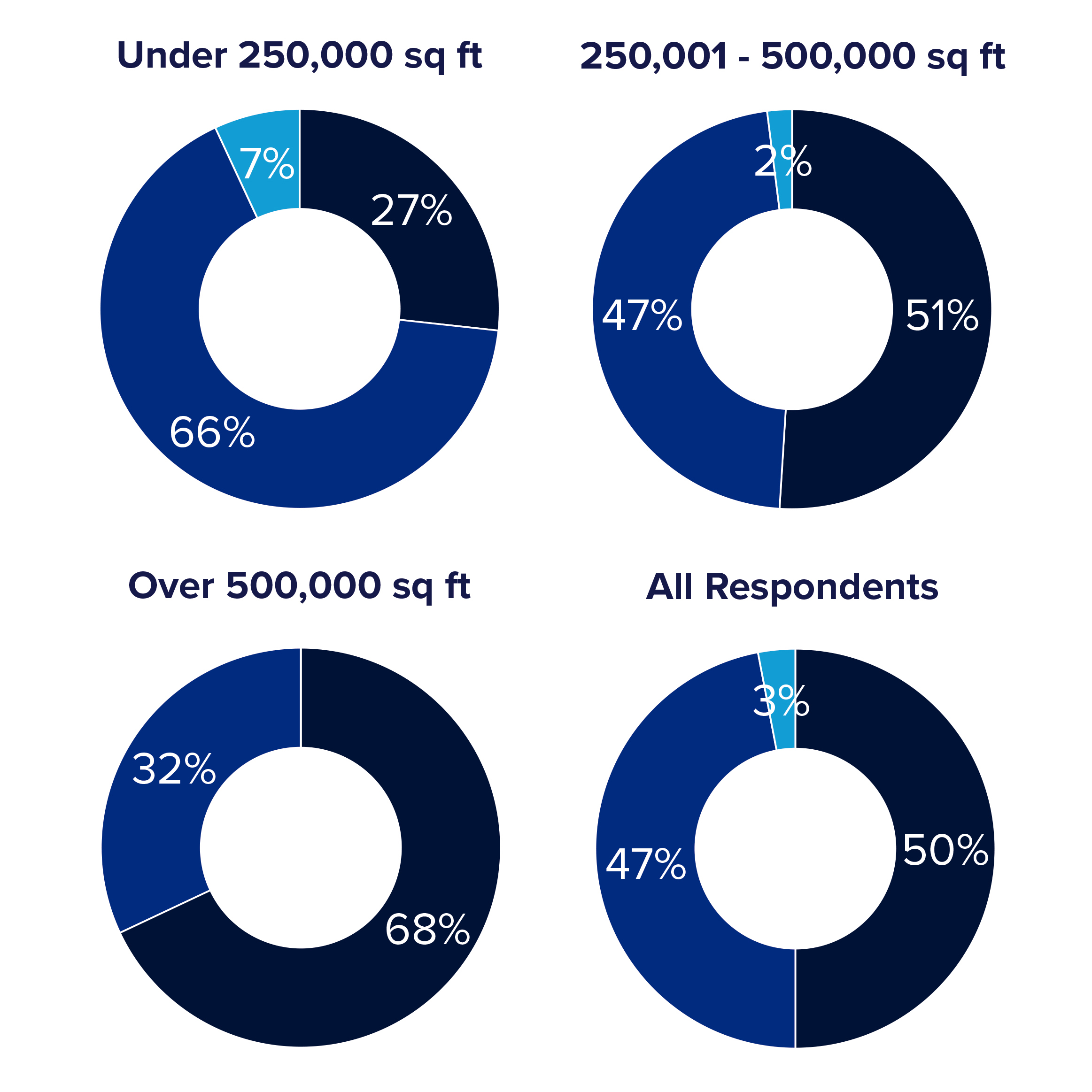
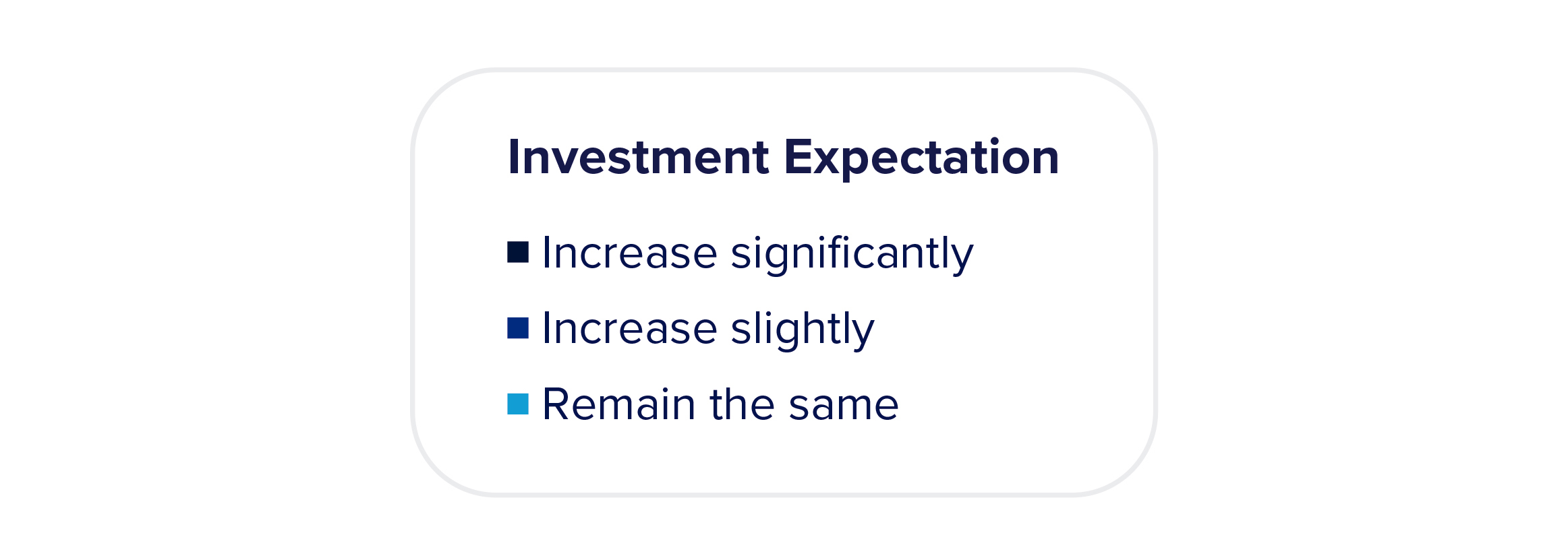
The correlation between estate size and investment confidence is compelling. Among those managing estates over 500,000 square feet, more than two-thirds expect significant investment increases, and every single respondent in this group anticipates at least some increase. This suggests that larger organisations, having already embarked on technology transformation journeys, are seeing sufficient returns to justify accelerated investment.
Smaller estates show a more measured approach, with the majority expecting slight rather than significant increases. This may reflect tighter budget constraints, different risk appetites, or a need to see proven returns from initial investments before committing to larger programmes. Notably, even among this group, 93% still expect investment to grow.
Headline Finding:
97% of FM decision-makers expect their technology investment to increase over the next 12-24 months. Zero respondents expect investment to decrease.
Investment Priorities
When asked to identify their top three technology investment priorities for the coming 12 to 24 months, respondents revealed a clear focus on technologies that capture, analyse, and act upon data.
Top Investment Priorities
The primacy of smart sensors and IoT reflects a fundamental recognition that effective facilities management must be built on a foundation of accurate, real-time data. Occupancy monitoring, environmental sensing, predictive maintenance signals, and energy tracking form the bedrock upon which more sophisticated applications can be built.
Digital FM platforms rank second, underscoring the need for integrated systems that can consolidate data, coordinate workflows, and provide visibility across operations. The shift toward cloud-based and mobile-enabled platforms reflects changing workforce expectations and the need for anywhere, anytime access to critical information.
Priority Variations by Estate Size
Investment priorities shift notably based on estate size. Larger estates show the strongest commitment to smart sensors and IoT, with 73% of those managing facilities over 500,000 square feet identifying this as a top priority compared to 50% of smaller estates. This likely reflects both the greater complexity of large estates and the economies of scale that make sensor deployment more cost-effective.
Interestingly, AI-powered software shows the inverse pattern. Smaller estates prioritise AI at 60%, significantly higher than the 30% among larger estates. This suggests smaller operations may see AI productivity tools such as copilot as a means to do more with limited resources, while larger organisations with more established teams focus first on foundational data infrastructure.
We asked: Which technology areas are your top three investment priorities for the next 12-24 months
“In my experience, technology investment in facilities management is no longer a question of ‘if’ but of disciplined execution. The transition to sensors, integrated platforms and data-led decision-making is delivering tangible benefits, particularly across larger and more complex estates. However, technology alone does not guarantee performance. The research rightly highlights the risk of underestimating training and capability development, which are critical to realising return on investment. Equally, we must challenge the underlying performance of our buildings and plant before introducing additional systems. Optimising core assets first avoids inefficiency and ensures that technology enhances, rather than masks, operational performance.”
— Ian Hunter, General Manager, Swords Pavilions
Autonomous Service Robots
Understanding Autonomous Service Robots
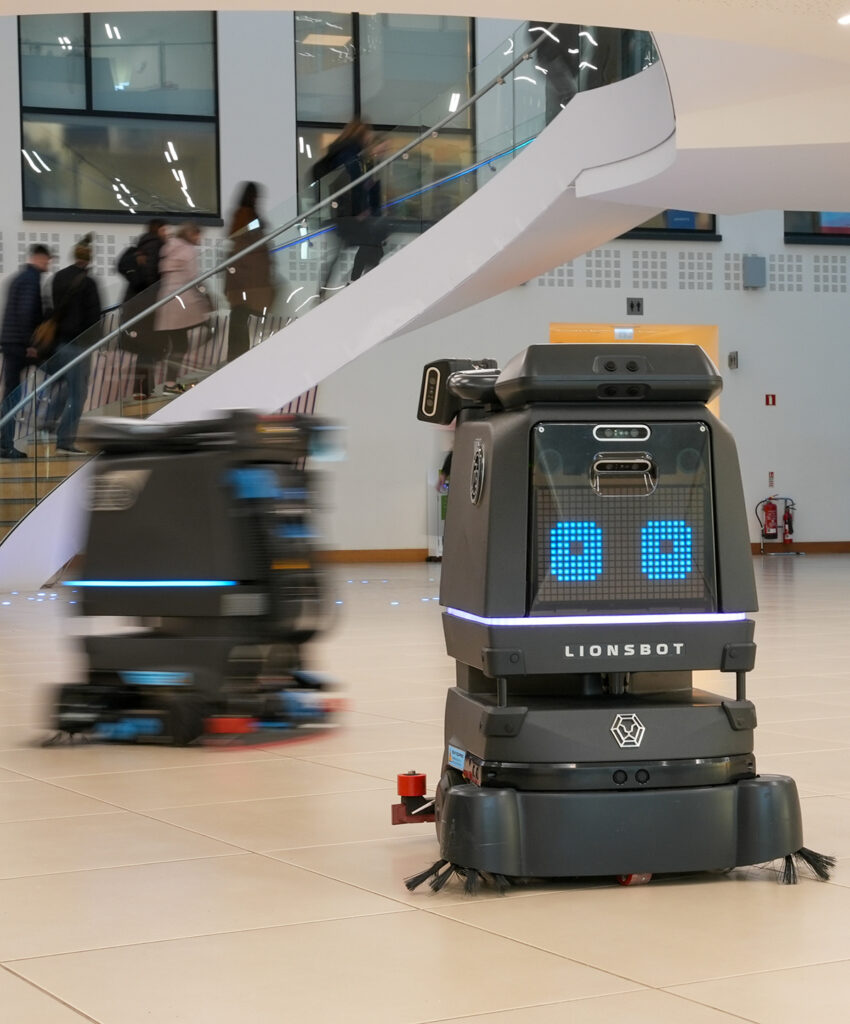
Autonomous service robots represent one of the most visible and tangible manifestations of technology transformation in facilities management. These machines operate independently to perform tasks that have traditionally required human labour, including floor cleaning, security patrolling, delivery services within buildings, and even disinfection.
The technology has matured considerably in recent years. Modern autonomous robots use sophisticated navigation systems combining LiDAR, cameras, and sensor fusion to move safely through dynamic environments. They can map spaces, identify obstacles, adapt to changes, and operate during off-peak hours to minimise disruption. Cloud connectivity enables remote monitoring, performance analytics, and fleet management across sites.
The Value Proposition
The business case for autonomous robots rests on several pillars. Consistency is paramount: robots perform tasks to the same standard every time, eliminating variability in service quality. Detailed operational data provides unprecedented visibility into cleaning coverage, frequencies, and performance metrics.
Labour considerations are significant but nuanced. Rather than replacement of cleaning staff, robots typically handle repetitive, physically demanding tasks like large floor areas, freeing skilled workers for detailed work, specialist cleaning, and tasks requiring human judgement. This augmentation model often improves job satisfaction while addressing recruitment challenges in a tight labour market.
A Technology Generating Strong Interest
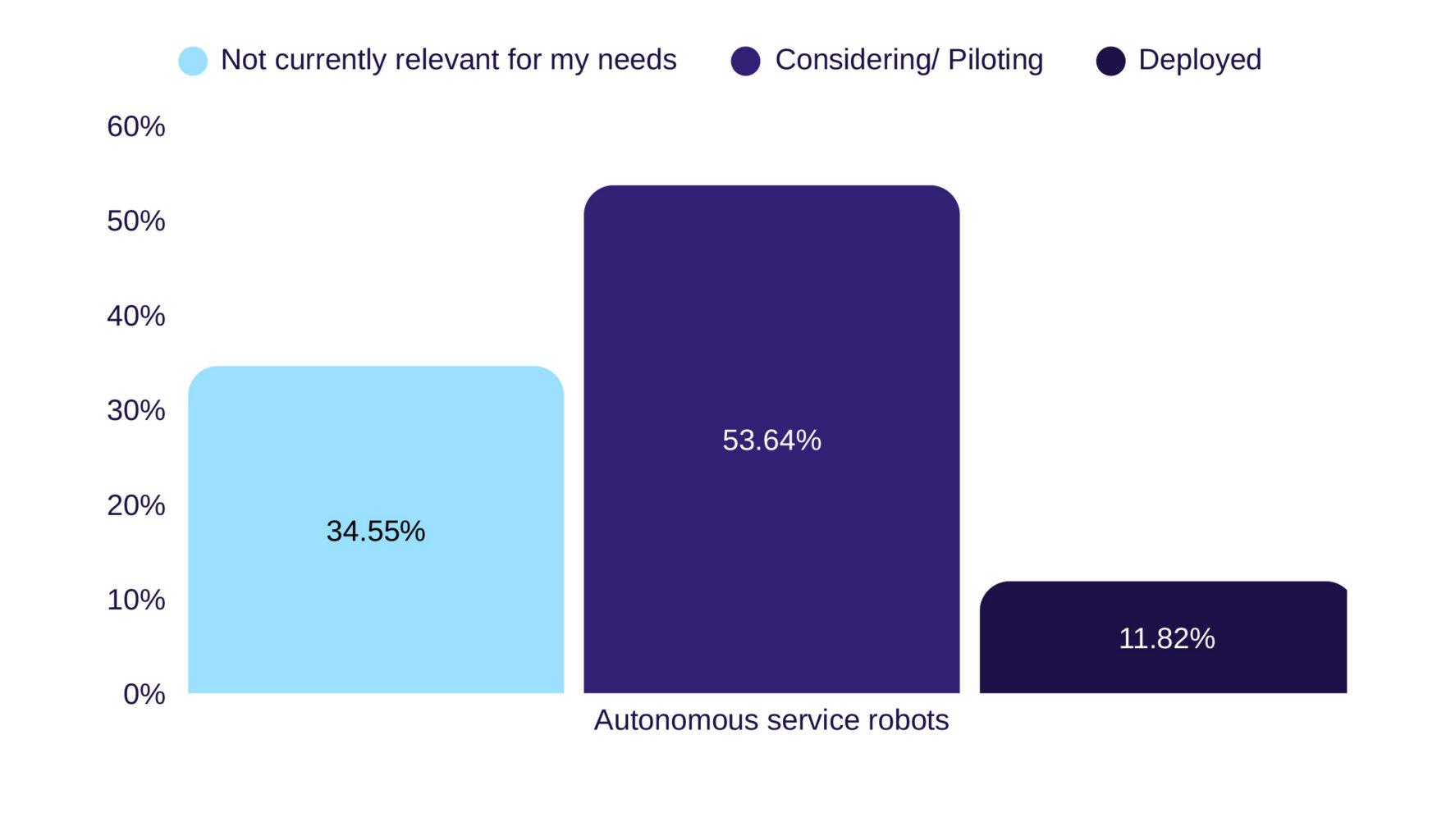
The survey reveals a fascinating pattern around autonomous robots. While 38% identify them as a top three investment priority, the adoption data tells a compelling story of active exploration. This level of active engagement makes autonomous robots one of the most explored emerging technologies in the sector. Only 35% of respondents say the technology is not currently relevant to their operations.
The gap between stated investment priority (38%) and active exploration (54% considering or piloting) suggests that autonomous robots occupy a unique position: widely recognised as promising, actively being evaluated, but perhaps not yet commanding budget commitment as a top priority. Organisations appear to be in a learning and pilot phase, gathering evidence before scaling investment.
Among larger estates, 57% are considering or piloting the technology. The scale of larger facilities makes the economics more compelling, as robots can cover greater floor areas and generate returns more quickly.
Adoption Status:
66% of FM decision-makers are actively considering, piloting, or have already deployed autonomous service robots.
We asked: Describe your organisation’s current status regarding Autonomous Service Robots.
Digital Facilities Management Platforms
The Evolution of FM Systems
Digital Facilities Management Platforms represent the operational backbone of modern FM organisations. These cloud-based systems, often referred to as CAFM (Computer-Aided Facilities Management) or IWMS (Integrated Workplace Management Systems), have evolved from simple maintenance tracking tools into comprehensive platforms that orchestrate the full spectrum of FM activities.
Mobile enablement has become standard, allowing technicians to receive, update, and complete work orders in the field. API connectivity enables integration with building management systems, IoT sensors, and enterprise applications.
Strategic Value
The value of integrated FM platforms extends well beyond operational efficiency. These systems create the single source of truth that organisations need for effective decision-making. They capture the data that demonstrates value to clients and stakeholders. They enable standardisation of processes across sites and teams. They provide the audit trail that supports compliance and governance requirements.
For organisations managing multiple sites or complex estates, the platform becomes the connective tissue that enables consistent service delivery at scale. Without such systems, organisations often struggle with siloed information, inconsistent processes, and limited visibility into performance.

Survey Insights: Foundation for Transformation
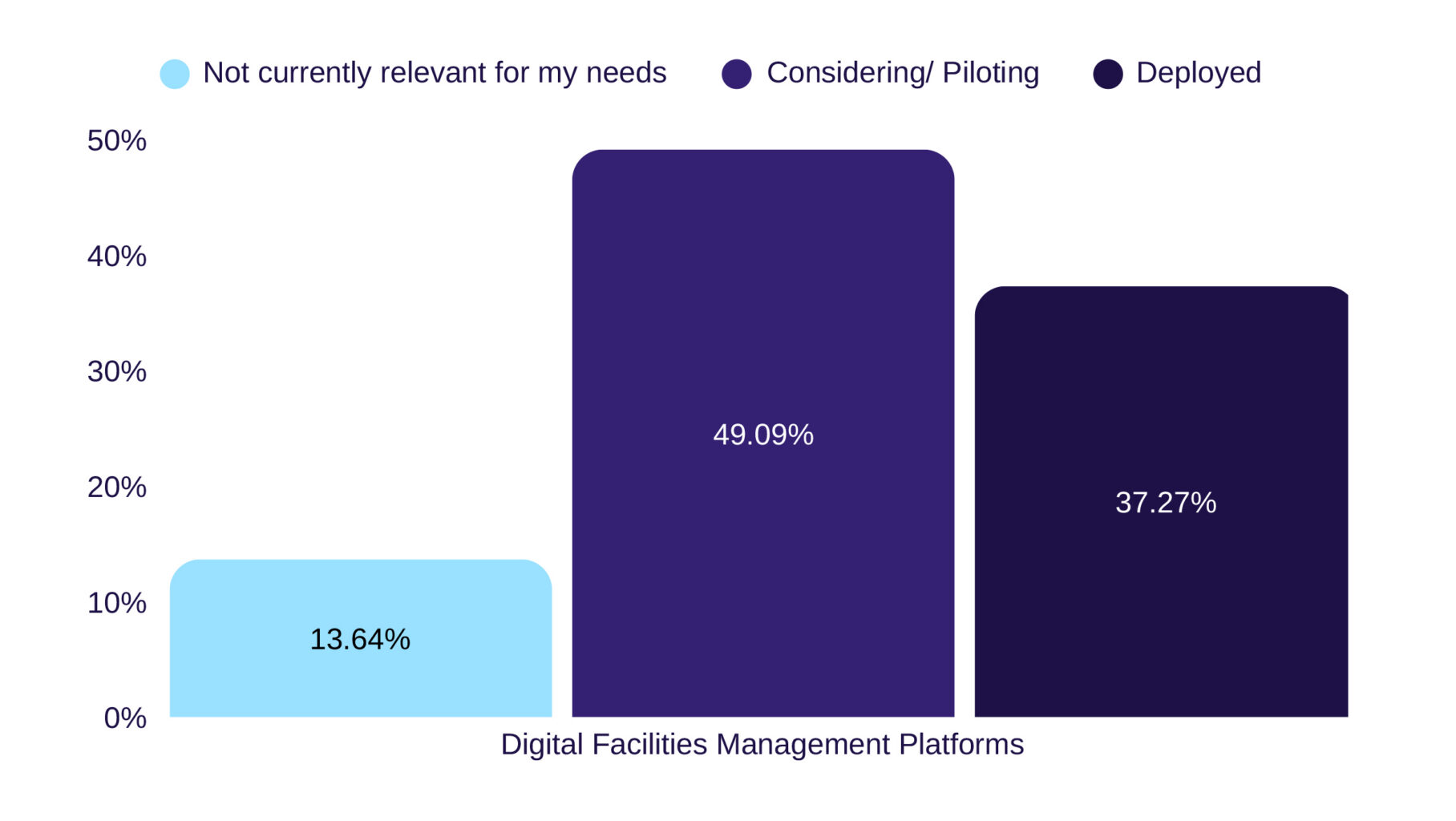
Digital FM platforms rank as the second-highest investment priority at 52%, reflecting their foundational importance. The adoption data reveals that this is a relatively mature technology category: 37% of respondents have already deployed such platforms, with another 49% actively considering or piloting solutions.
Larger estates show particularly active engagement, with 62% in consideration or pilot phases. This suggests that while many have implemented solutions, there remains significant activity around platform enhancement, replacement of legacy systems, or expansion of capability. Only 8% of large estate managers consider digital platforms not relevant, indicating near-universal recognition of their importance.
We asked: Describe your organisation’s current status regarding Digital Facilities Management Platforms
Technology Focus: Artificial Intelligence in FM
AI Applications in Facilities Management
Artificial Intelligence is transforming facilities management through multiple application pathways. AI-powered productivity tools like Microsoft Copilot are enabling FM professionals to work more efficiently, automating routine communications, generating reports, and extracting insights from data. Predictive maintenance algorithms analyse sensor data to anticipate equipment failures before they occur. Intelligent building systems optimise energy consumption by learning occupancy patterns and environmental conditions.
Beyond these operational applications, AI is enabling new approaches to space planning, security monitoring, and service delivery optimisation. Machine learning models can predict space utilisation patterns, enabling more effective workplace design. Computer vision systems can monitor for safety hazards or security anomalies. Natural language processing enables more intuitive interfaces between building users and FM services.
The Productivity Promise
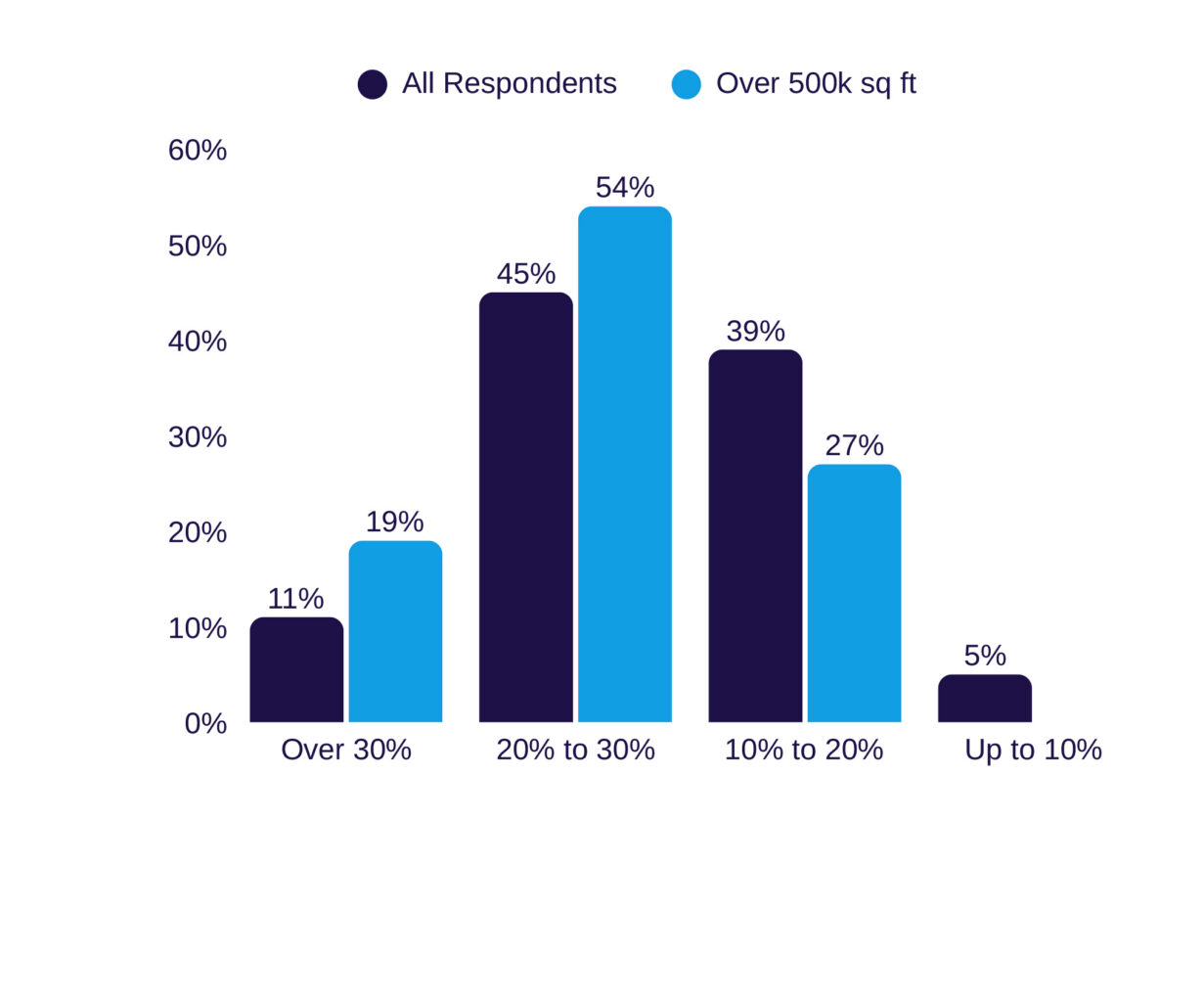
The survey reveals remarkable confidence in AI’s ability to enhance productivity within facilities management. When asked about expected productivity improvements from AI by 2030, respondents expressed striking optimism.
AI Productivity Expectations:
95% of respondents expect AI to deliver productivity improvements of at least 10% by 2030, with 56% expecting gains of 20% or more
Large estate managers show even greater confidence, with 73% expecting productivity gains of 20% or higher, and not a single respondent expecting gains below 10%. This confidence likely reflects greater exposure to AI capabilities and more resources to invest in implementation.
Current Adoption Status
Despite high confidence in AI’s future impact, current adoption remains relatively nascent. Only 37% of respondents have already deployed AI-powered productivity tools, with 45% in consideration or pilot phases. The 18% who consider AI not currently relevant may reflect uncertainty about where to start or concerns about readiness for AI implementation.
The investment priority data reveals interesting segmentation. Smaller estates prioritise AI-powered software at 60%, significantly higher than the 30% among larger estates. This pattern suggests that organisations with limited resources see AI as an enabler of greater efficiency, a way to achieve more with constrained teams. Larger estates, while equally optimistic about AI’s potential, appear to be prioritising foundational data infrastructure first.
“At the moment, AI is presented largely as a single, broad capability, when in practice it encompasses several very different types of technology that play different roles and suit organisations in different circumstances. This is a common trap many businesses fall into, and drawing clearer distinctions could help organisations prioritise more effectively.
LLM-based productivity tools such as Copilot, ChatGPT, and Claude can be adopted relatively quickly and deliver benefits at an individual and team level. In an FM context, these might help an engineering manager produce method statements more quickly, allow a helpdesk team to summarise and triage incoming requests, or help operational managers make better sense of maintenance data, contract performance, and energy trends without needing specialist analytics skills. The barriers to entry are lower than for other forms of AI, though scaling adoption still requires governance and change management.
A distinct category is automation enhanced by AI within operational and business processes. In FM, this could mean automated fault diagnosis driven by sensor data and maintenance history, extraction of compliance data from supplier documentation, or dynamic scheduling of planned work based on real-time building conditions. Here, success depends not only on the technology but heavily on whether underlying processes are well defined, consistently followed, and properly documented.
Beyond these, there are AI and machine-learning approaches that work across multiple systems to deliver predictive insights and preventative actions. In FM, this includes areas like predictive maintenance across a portfolio using sensor and building management data, energy optimisation informed by occupancy patterns, or continuous compliance monitoring. These approaches depend on well-connected data sources and sound governance, and represent a longer-term investment rather than a quick win.”
— Phil Darcy, Head of Data & Emerging Technologies, Bidvest Noonan
“Snap Regional Security is set to increase technology investment over the coming 12–24 months, mirroring wider trends in the Facilities Management sector. A key priority is utilising AI to automate and markedly improve dynamic site risk assessments, in line with the high industry expectation that AI will deliver substantial productivity gains (anticipated by 95% of FM leaders). However, successful deployment is hindered by significant obstacles. As research indicates that 57% of technology initiatives struggle due to integration complexity and limited resource availability. Critically, we must preemptively address the ‘training paradox,’ as insufficient staff preparation is a recognised factor that can lead to implementation failure.”
— George Hartford, Senior Manager, Regional Security Operations, Snap Inc.
Business Drivers: Beyond Cost Reduction
Understanding why organisations invest in technology is as important as understanding what they invest in. The survey reveals that FM technology investment is driven by a sophisticated mix of operational and strategic imperatives.
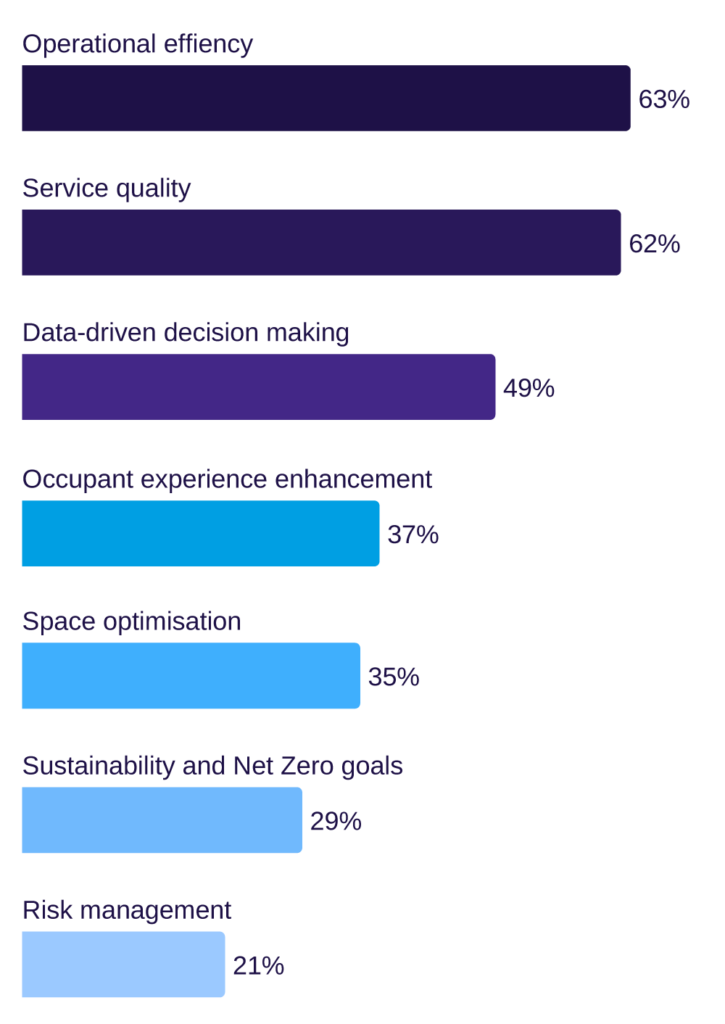
Key Business Drivers for Investment
The near-parity between operational efficiency (63%) and service quality (62%) as top drivers is noteworthy. While efficiency might be expected to dominate, the data confirms that FM leaders view technology as a means to enhance the experience of building occupants, not merely to reduce costs. This reflects the evolution of FM from a cost centre to a strategic function that contributes to organisational effectiveness.
Data-driven decision making, cited by nearly half of respondents (49%), reinforces the investment priority findings. Organisations want technology that provides evidence for decisions, demonstrates value to stakeholders, and enables continuous improvement. This appetite for data underscores the importance of sensor deployment and platform integration.
Variations by Estate Size
Larger estates show stronger emphasis on operational efficiency at 70% compared to 60% for smaller estates, reflecting the greater complexity of their operations. Interestingly, smaller estates place higher priority on space optimisation at 53% compared to 19% for larger estates, perhaps reflecting the pressure to maximise value from more limited footprints.
Sustainability and Net Zero goals show consistent interest across all segments at around 30%, suggesting that environmental considerations have become a baseline expectation rather than a differentiator.
We asked: What are the key business drivers for your technology investment?

What Makes Technology Succeed
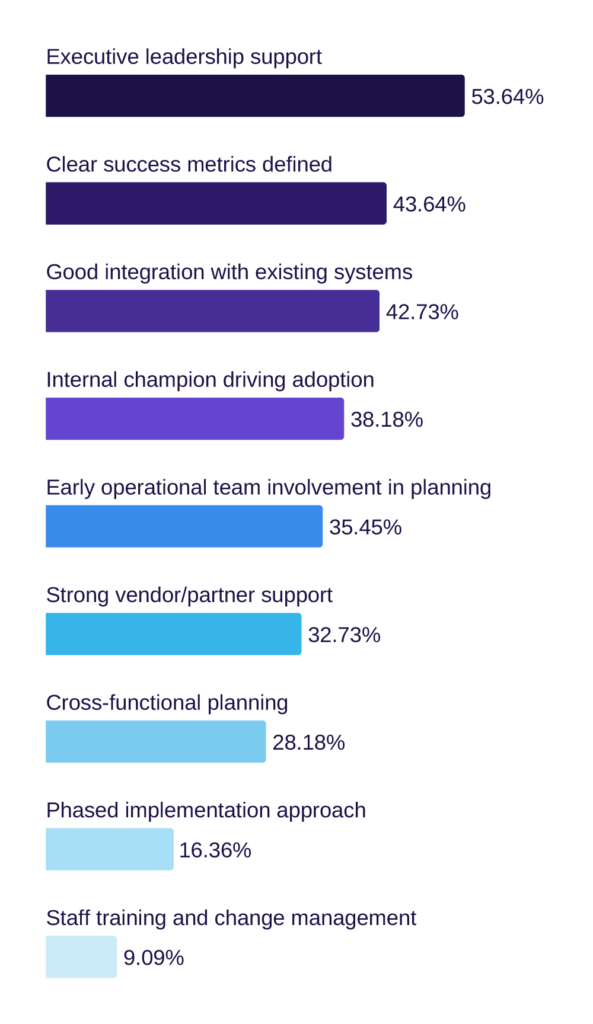
Understanding the factors that drive successful technology implementation is crucial for organisations planning their investment strategies. Respondents were asked to identify the most critical success factors from their experience with technologies that have performed well.
Critical Success Factors
Executive leadership support emerges as the most critical factor, cited by more than half of respondents (54%). This finding emphasises that technology transformation is not merely a technical exercise but a strategic initiative requiring visible commitment from senior leaders. Their support provides the resources, removes organisational barriers, and signals the importance of adoption to the wider organisation.
The importance of clear metrics (44%) reflects a maturing approach to technology investment. Organisations that define success criteria upfront are better positioned to track progress, identify issues early, and demonstrate value to stakeholders. This data-oriented mindset aligns with the broader emphasis on evidence-based decision making.
Integration capability ranks highly (43%), acknowledging the reality that new technologies must work alongside existing systems. Isolated point solutions create data silos and operational friction. Successful implementations connect with building management systems, enterprise platforms, and other FM technologies to create a coherent operational ecosystem.
We asked: For technologies that have succeeded, what were the most critical success factors?

When Technology Falls Short
While the sector shows strong confidence in technology investment, the research also reveals that implementations do not always meet expectations. Understanding why technologies underperform is essential for avoiding similar pitfalls.
Primary Reason for Underperformance
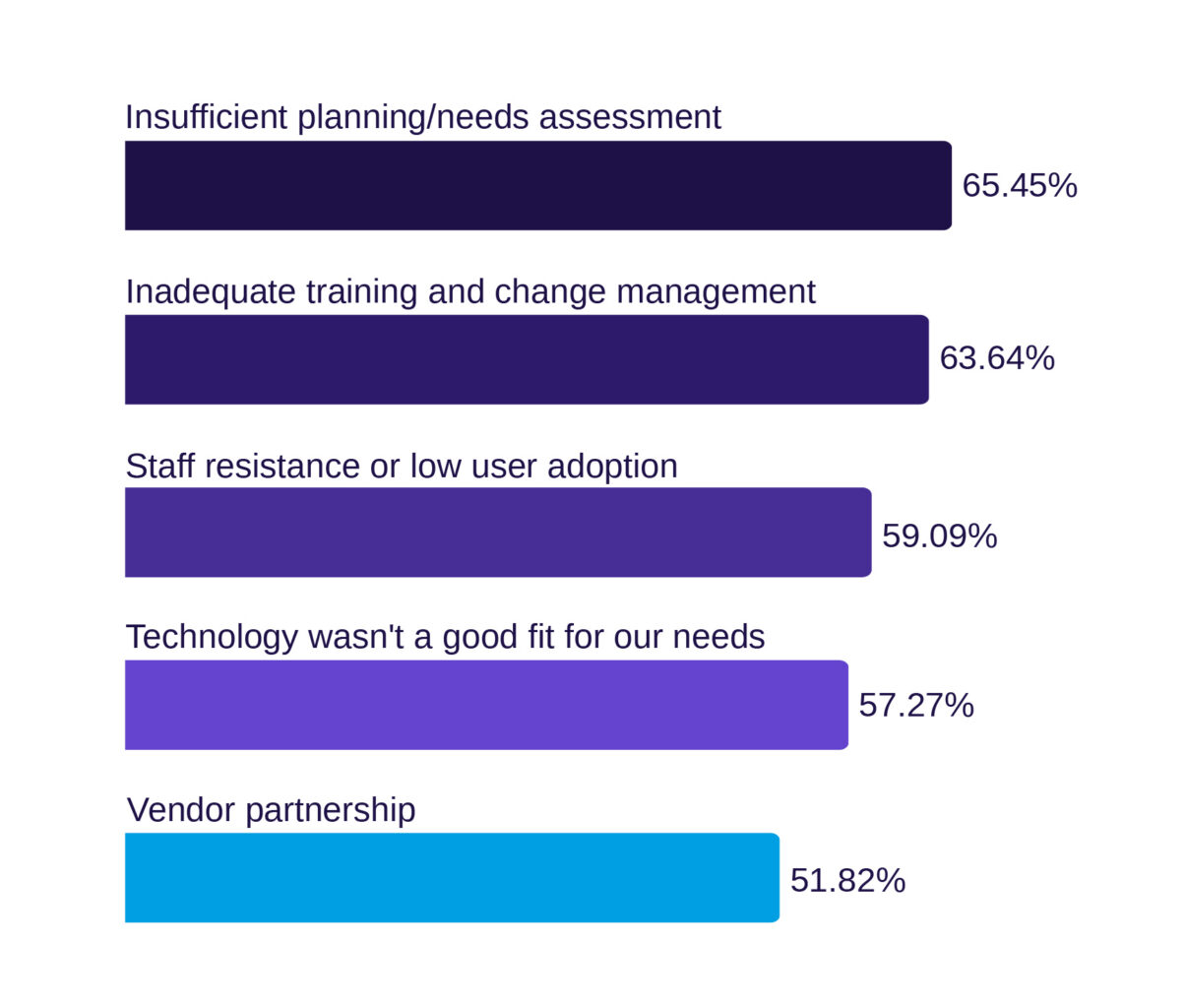
The prominence of planning failures (65%) underscores that technology selection and implementation must be grounded in thorough needs assessment. Rushing to adopt solutions without fully understanding requirements, workflows, and integration needs leads to misalignment between technology capabilities and operational realities.
Inadequate training and change management is cited by 64%, staff resistance or low user adoption by 59%, technology not being a good fit by 57%, and vendor partnership issues by 52%.
We asked: For technologies that have underperformed or failed to meet expectations, what were the primary reasons?
The Training Paradox
Critical Insight
Comprehensive staff training ranks lowest among success factors at 9%, yet inadequate training is cited as a cause of failure by 64% of respondents. This disconnect represents a significant blind spot in technology implementation.
This paradox is one of the most striking findings from the research. When technologies succeed, organisations appear to attribute success to leadership, strategy, and technical factors rather than training. Yet when things go wrong, the failure to adequately prepare and support staff becomes painfully apparent.
The implication is clear: training may be necessary but not sufficient for success, and its absence is often only recognised in hindsight. Organisations would benefit from elevating training and change management in their implementation planning, treating it as a critical success factor rather than an afterthought.
The Human Factor: A Nuanced Picture
The research reveals important nuance in how the workforce engages with technology change. The data tells different stories depending on whether we look forward at current challenges or backward at past failures.
| Human Factor | As Current Challenge | As Reason for Past Failure |
|---|---|---|
| Staff resistance to change | 15% | 59% |
| Skills and capability gaps | 46% | N/A |
When asked about current challenges to technology adoption, only 15% cite staff resistance to change. Yet when reflecting on technologies that have underperformed, 59% identify staff resistance or low user adoption as a primary cause. This apparent contradiction reveals something important: FM leaders do not perceive their workforce as inherently resistant, but recognise that resistance emerges when implementation is poorly handled.
The 46% citing skills and capability gaps as a current challenge points toward the real opportunity. What manifests as resistance may often be rooted in capability concerns. Staff may not be opposed to technology in principle but may lack confidence in their ability to use it effectively. This reframing has important implications: addressing the capability gap through training and support may be more effective than attempting to overcome resistance through mandates or incentives.
“The research highlights a sector on the brink of exciting transformation, driven by technology investment yet also points to a lack of understanding of the importance of the human factor. I was particularly struck by the ‘training paradox,’ where ‘comprehensive staff training ranks lowest among success factors at 9%, yet inadequate training is cited as a cause of failure by 64%’. This disconnect reveals how human capability and the importance of the entire team truly believing and understanding the benefits of the technology journey is often underestimated and undervalued as a success factor.”
— Ben Knights, Head of Estates Services, Compliance & Facilities, Royal Botanic Gardens, Kew
Outcomes Achieved: Evidence of Impact
Beyond intentions and challenges, the research captures the actual outcomes that organisations have achieved through technology deployment. These findings provide tangible evidence of technology’s impact on FM operations.
Reported Outcomes from Technology Deployment
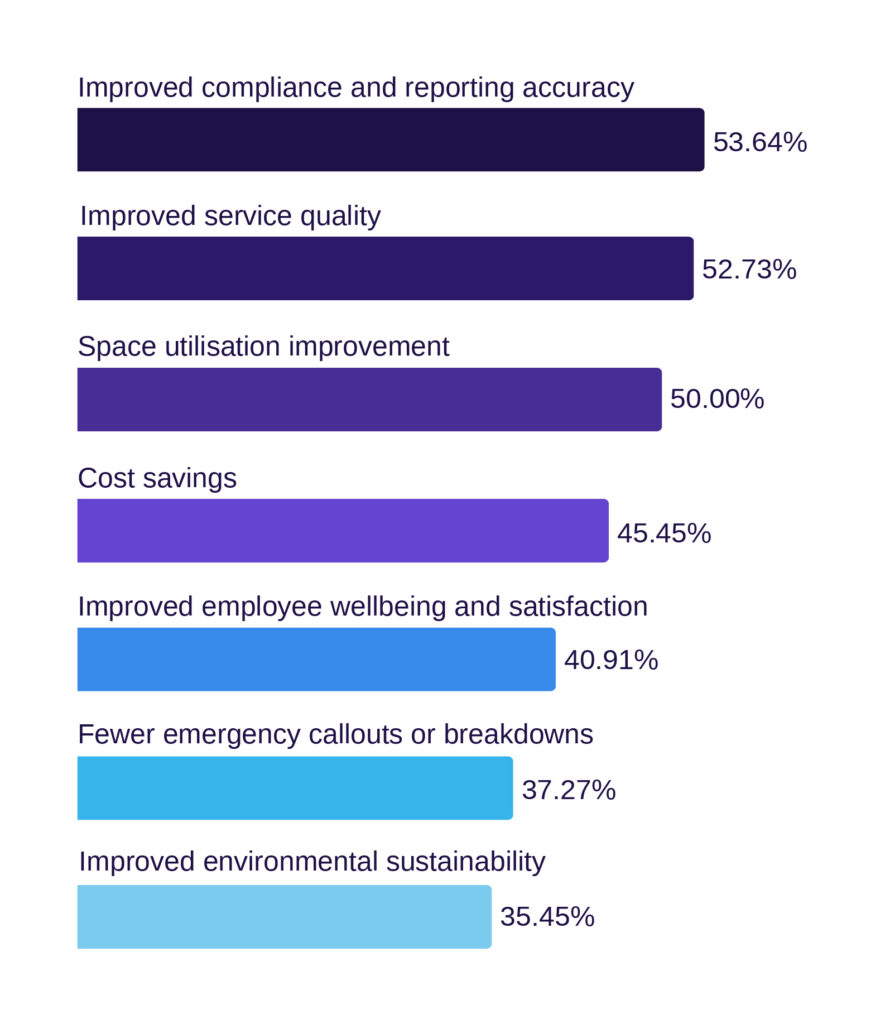
Compliance and reporting accuracy emerge as the most commonly achieved outcome (54%). This reflects the power of integrated systems to capture, consolidate, and present information that demonstrates regulatory compliance, tracks performance against service level agreements, and provides audit trails for governance purposes.
The prominence of space utilisation improvement (50%) is particularly notable given current workplace dynamics. As organisations navigate hybrid working and assess real estate requirements, accurate space utilisation data has become strategically valuable. Technology-enabled occupancy monitoring and space analytics are helping organisations make evidence-based decisions about their portfolio.
Measurement Maturity
Encouragingly, 96% of respondents have established frameworks to measure technology outcomes. Among large estates, this rises to 100%, suggesting that mature organisations recognise that investment without measurement is investment without accountability. The 4% without measurement frameworks represent an opportunity for improvement.
We asked: What outcomes has your organisation achieved through technology deployment?

Navigating Adoption Challenges
Even with strong investment confidence and clear priorities, organisations face significant obstacles to successful technology adoption. Understanding these challenges is essential for realistic planning and resource allocation.
Biggest Challenges to Technology Adoption
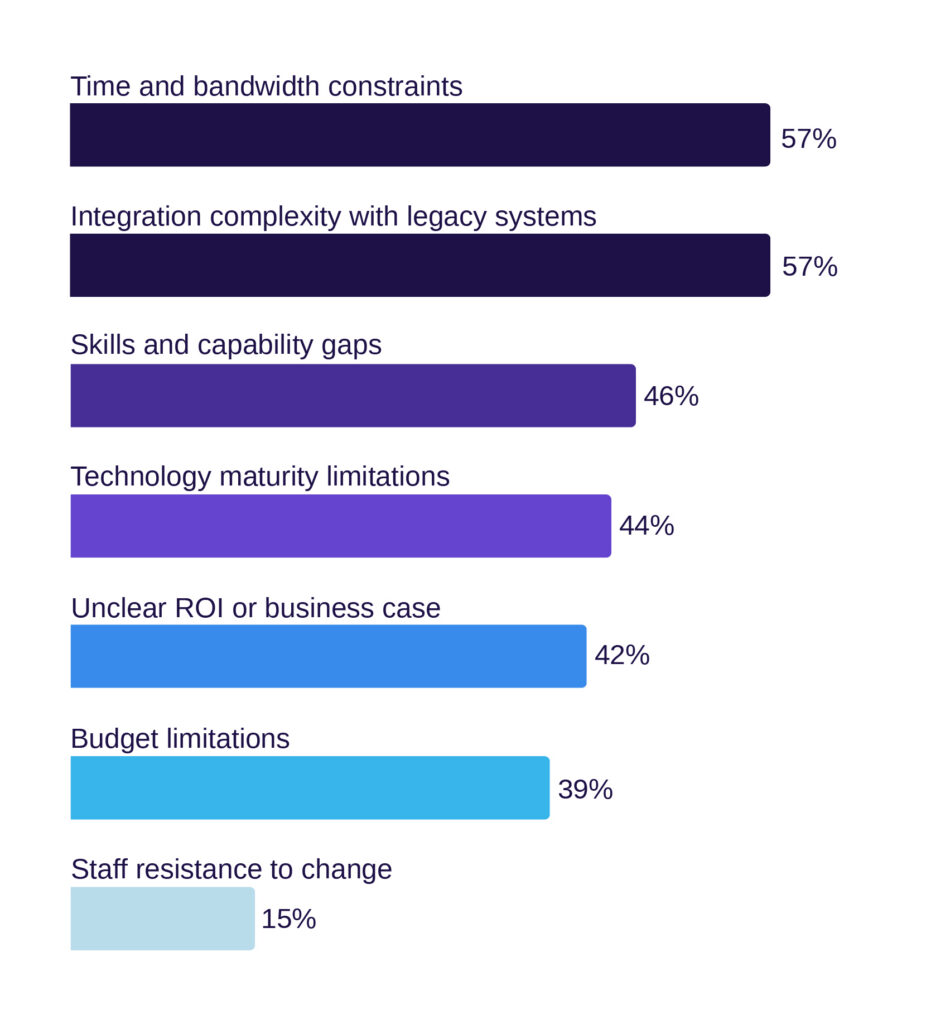
Time and bandwidth constraints rank joint highest (57%), reflecting a challenge that pervades the sector. FM teams are typically lean operations focused on daily service delivery. Finding capacity to evaluate, implement, and optimise new technologies whilst maintaining operational standards is genuinely difficult. This resource constraint is more acute for smaller estates, which may lack dedicated technology or transformation resources.
Integration complexity shares the top position (57%). Many FM organisations operate in technology environments shaped by decades of point solutions, legacy systems, and inherited infrastructure. Connecting new technologies to these environments requires expertise, time, and often compromise. The challenge is particularly acute for larger estates, with 65% citing integration complexity compared to 50% for smaller operations.
The Budget Reality
Interestingly, budget limitations rank relatively low at 39% overall. This is not to suggest that money is unlimited, but rather that other barriers often prove more constraining. Smaller estates do face greater budget pressure at 47%, while larger estates cite budget limitations at just 30%. This variation likely reflects both absolute budget availability and the ability of larger organisations to spread investment across greater scale.
We asked: What are the biggest challenges to successful technology adoption in your organisation?
Strategic Recommendations
Drawing on the research findings, we offer the following recommendations for FM organisations seeking to maximise returns from technology investment.
Close the Training Gap
The training paradox revealed by this research demands urgent attention. Organisations should plan for sound training and change management as integral to technology investment, not as an optional add-on. Given that 64% cite inadequate training as a cause of failure, yet only 9% recognise it as a success factor, there is a clear blind spot to address. Treat training investment as insurance against the 59% failure rate attributed to staff resistance and low adoption.
Address Capability, Not Just Resistance
With 46% citing skills gaps as a challenge but only 15% citing resistance, the data suggests that empowering staff with skills and confidence may be more effective than focusing on overcoming opposition. Frame technology change as capability development rather than imposed transformation.
Define Success Before You Start
Clear success metrics rank among the top critical success factors. Before implementing any technology, organisations should define what good looks like, how it will be measured, and what thresholds represent success. Ask: What specific outcome will this technology deliver? How will we measure it? What baseline are we improving from? Who owns the measurement? This discipline provides the evidence base to justify ongoing investment.
Secure Executive Sponsorship
Technology transformation is a leadership challenge as much as a technical one. Visible executive support, identified as the top success factor, provides resources, removes barriers, and signals organisational priority. Implementations lacking senior sponsorship face an uphill battle for adoption and sustainability.
Conclusion: A Sector in Transformation
This research captures facilities management at a decisive moment. The near-universal expectation of increased technology investment signals that digital transformation has moved from aspiration to imperative. The sector has embraced the reality that effective FM increasingly depends on technology capability.
The findings reveal a sector that is both ambitious and pragmatic. FM leaders are prioritising foundational technologies that capture and integrate data before pursuing more advanced applications. They recognise the importance of executive support, clear metrics, and integration capability. They understand, at least in hindsight, that training and people factors often determine whether investments deliver returns.
Challenges remain significant. Time constraints, integration complexity, and skills gaps present genuine obstacles. The gap between intention and execution on training and change management requires attention. But with 97% expecting increased investment and strong confidence in AI’s potential, the direction of travel is clear.
For FM organisations, the path forward requires balancing ambition with realism. The technology exists to transform facilities management. The appetite for investment is evident. Success will come to those who invest thoughtfully in data foundations, integrate effectively with existing systems, support their people through change, and measure what matters. As the sector accelerates toward an AI-enabled future, the organisations that master these fundamentals today will be best positioned to capture the productivity gains and service improvements that technology promises, and to lead the next phase of FM evolution.